FULL HOME RENOVATION, DESIGN-BUILD RENOVATION
LOCATION: MIDTOWN
APPROXIMATE RENOVATION INVESTMENT: $500,000 – $750,000
The Vision
With two young children, the homeowners wanted a home that would better support their growing family. They wanted to make better use of the existing space, improve the flow of the second floor, create more storage, update the bathrooms, and make the home more comfortable and functional for everyday life.
The goal was not to make the house bigger, but to make better use of what was already there — creating a home that felt more cohesive and contemporary while still meeting the practical needs of a busy family.

The Challenge
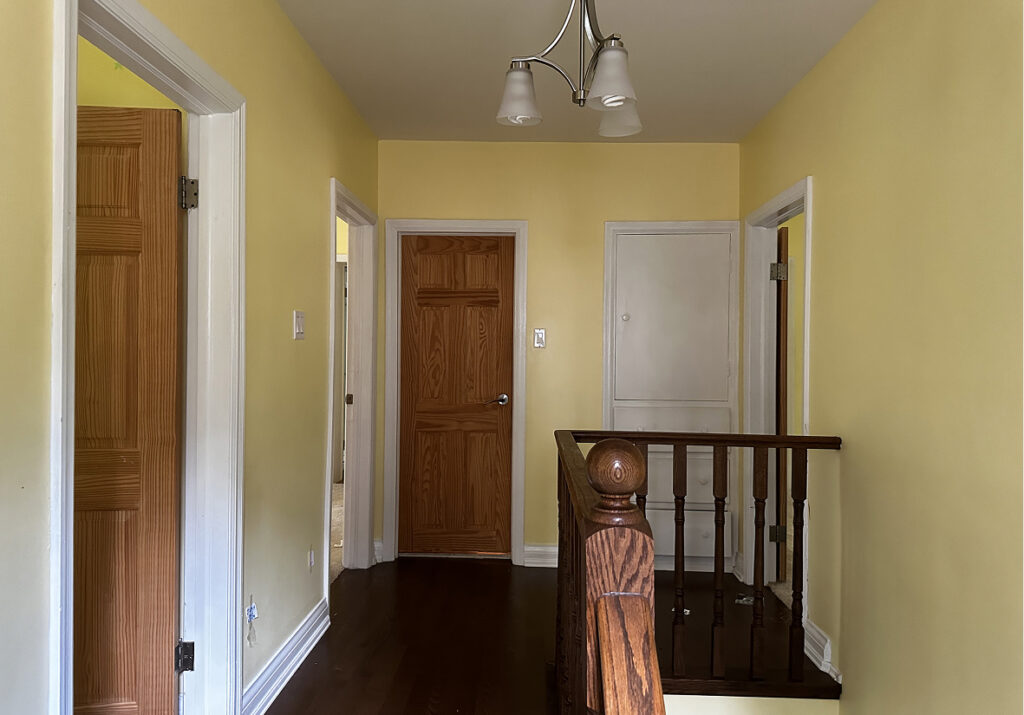
The existing second-floor layout no longer worked well for the family, with inefficient circulation, limited storage, privacy concerns, and bathroom access that needed rethinking. The basement had its own set of challenges, including moisture, inadequate insulation, cold spots, limited storage, and a long passageway that restricted how the space could be used. The furnace’s central location also affected the basement’s usability.
The home’s original 1950s HVAC and electrical systems required significant attention. Once demolition began, previously concealed conditions, including asbestos and uninsulated areas, were uncovered, adding further complexity to the renovation.
The challenge was to address these issues while improving how the home functioned as a whole — all within the existing footprint.
The Approach
Golden Bee Homes approached the renovation as one connected project, considering the second floor, main floor, and basement together rather than treating each level in isolation.
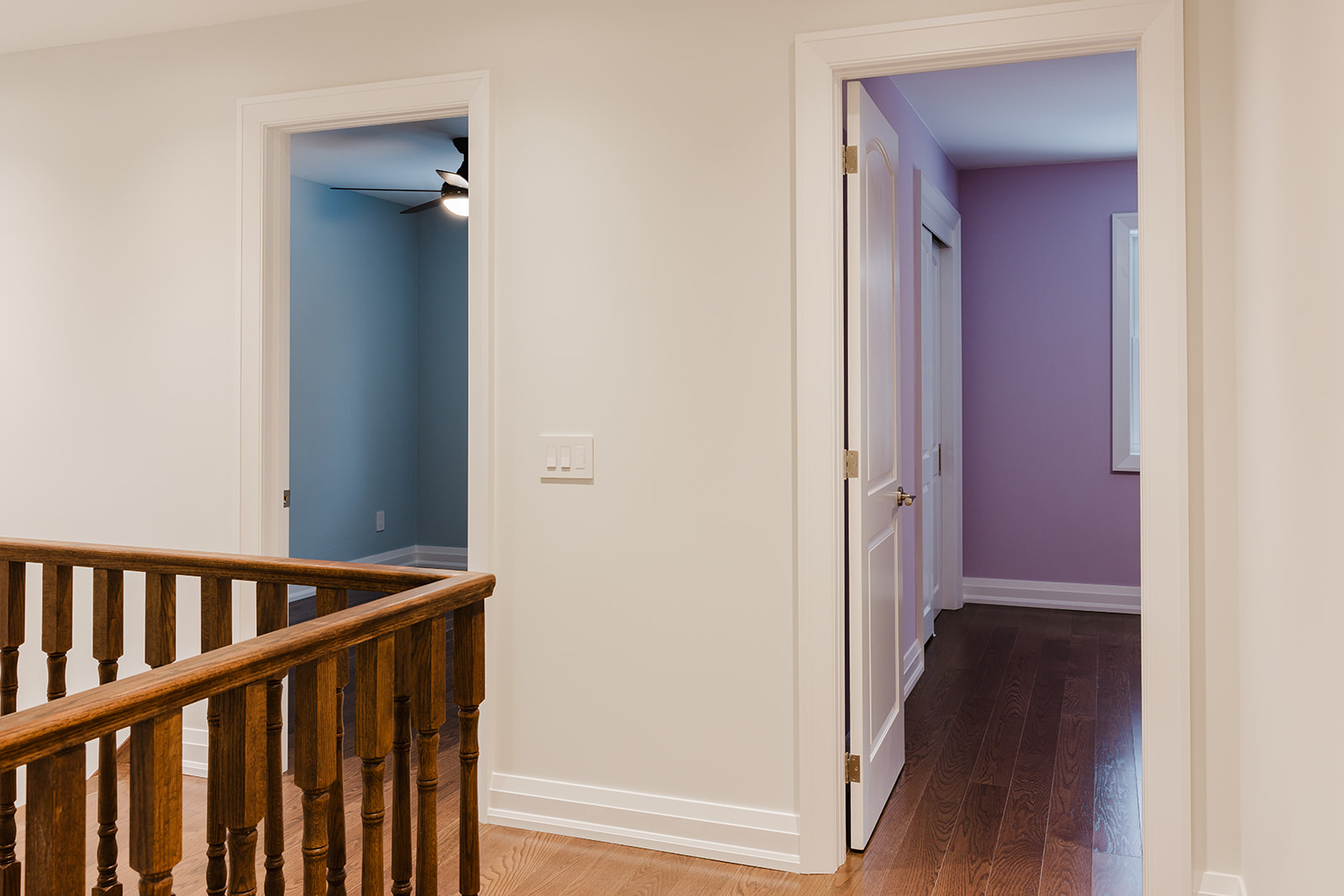
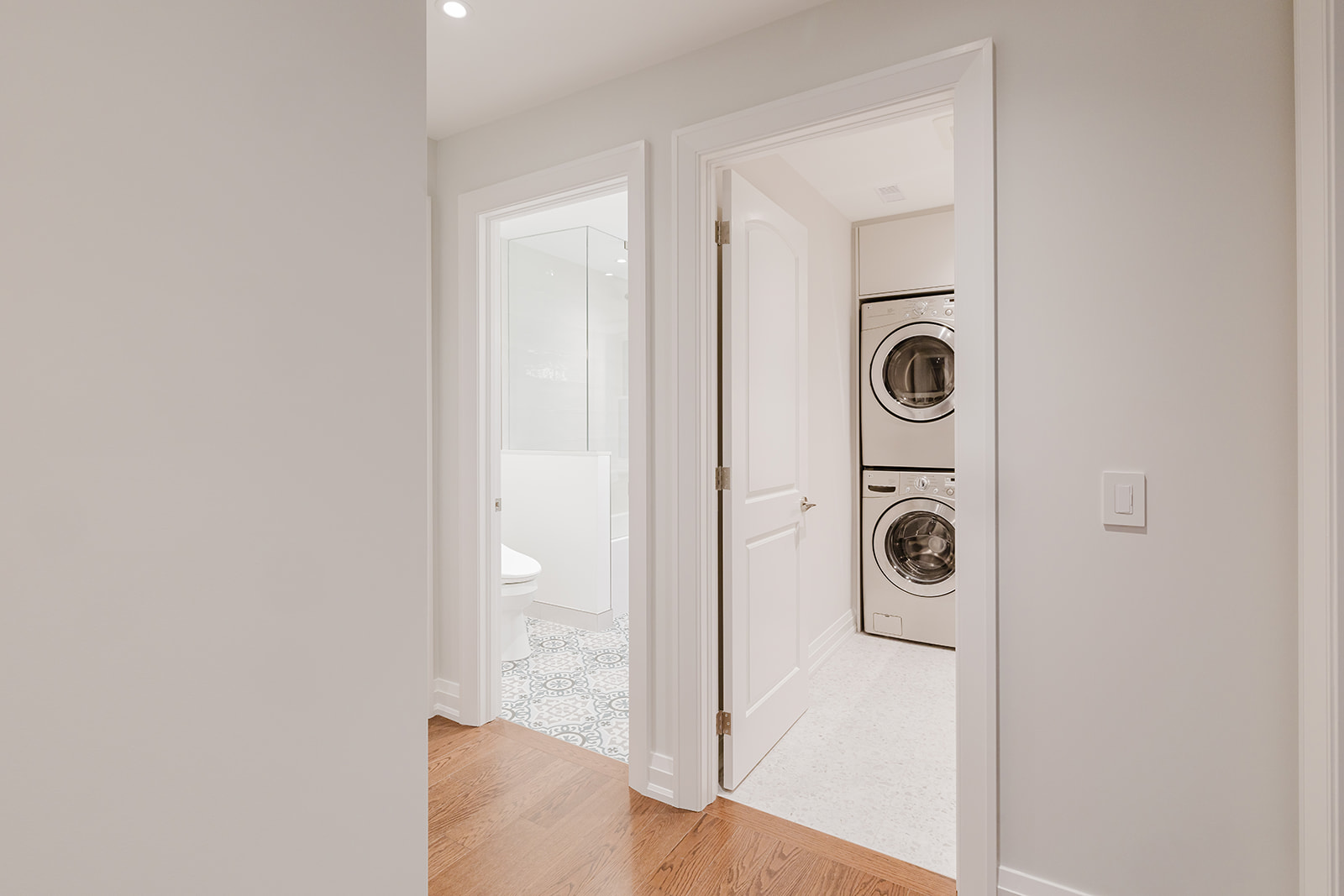
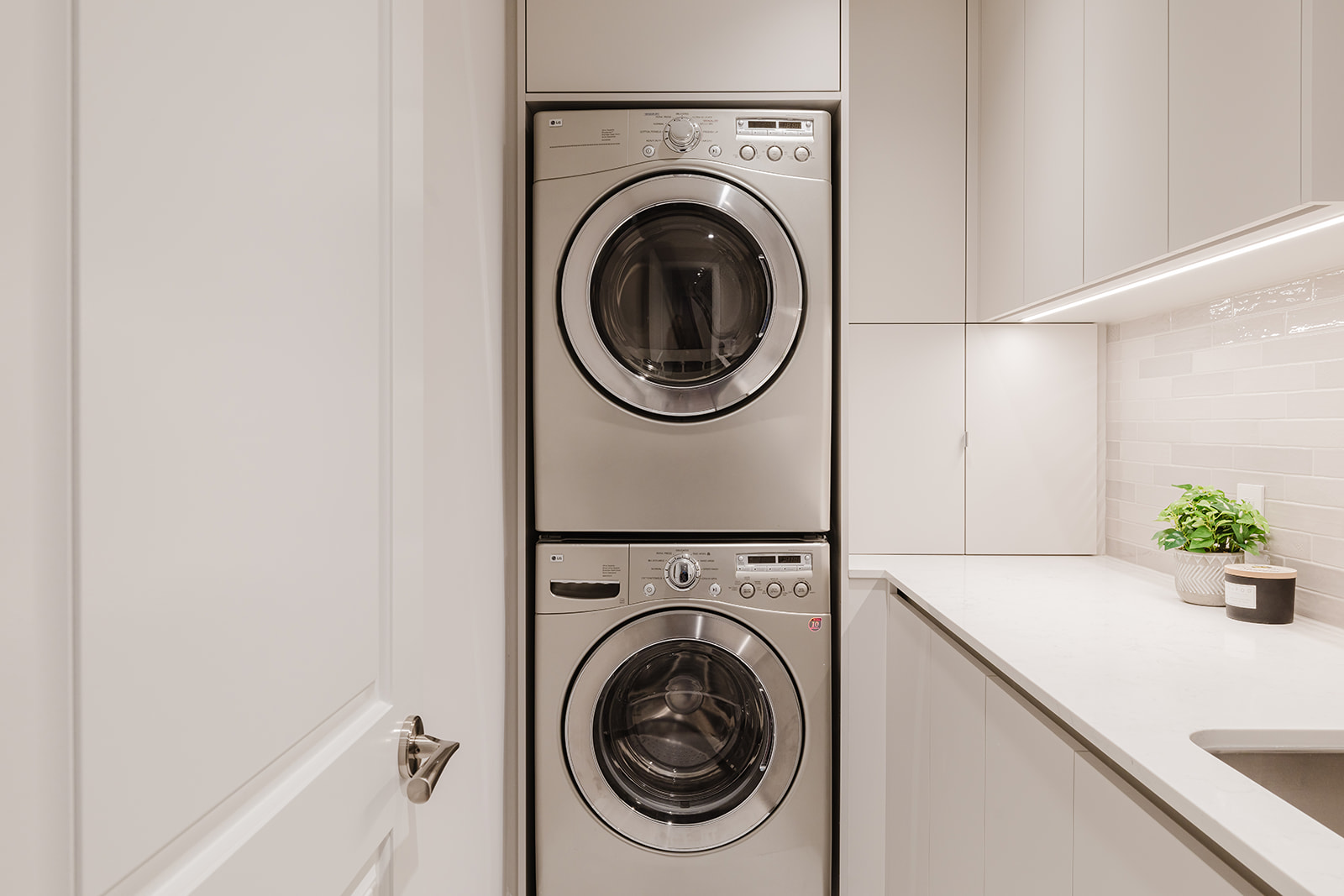
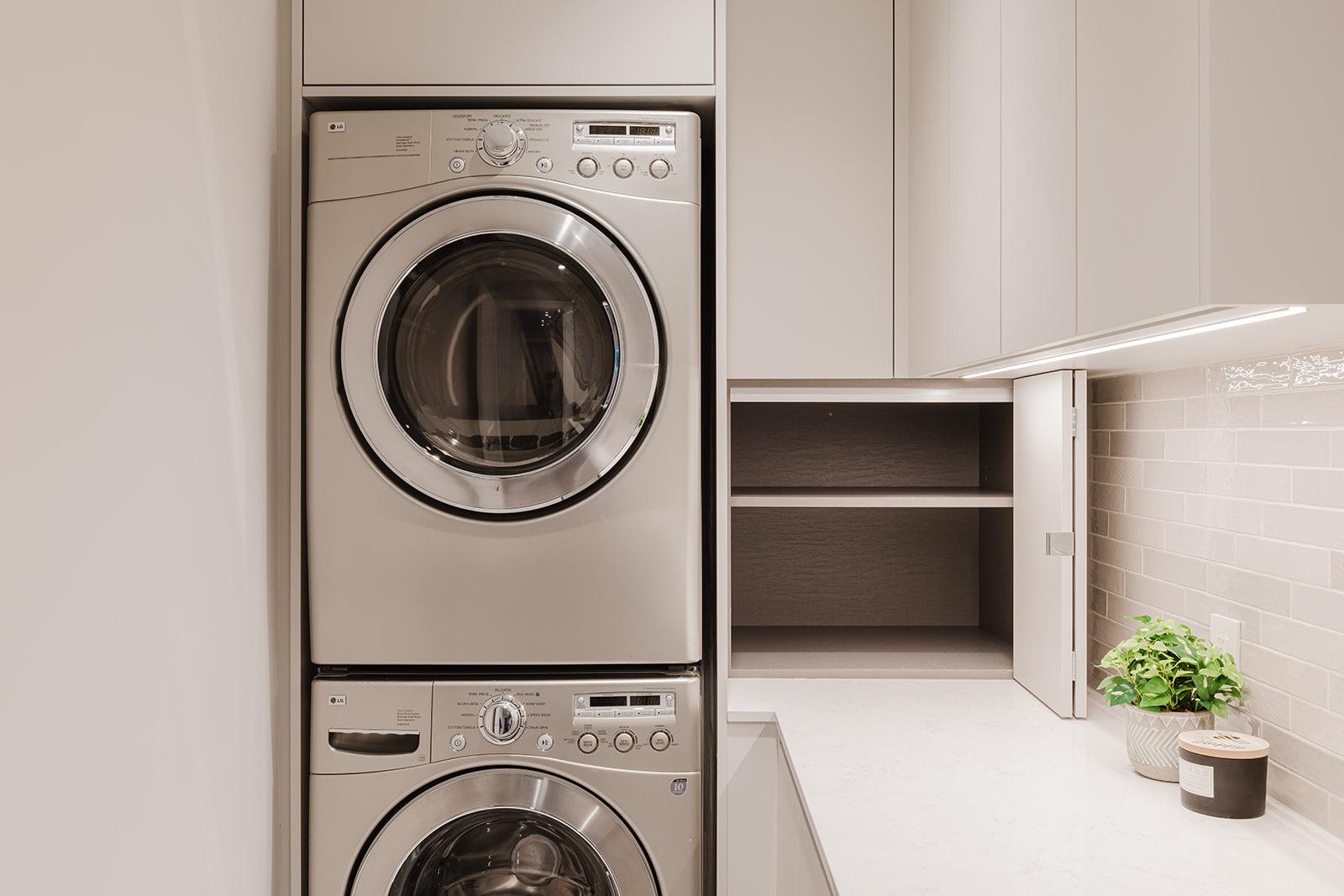
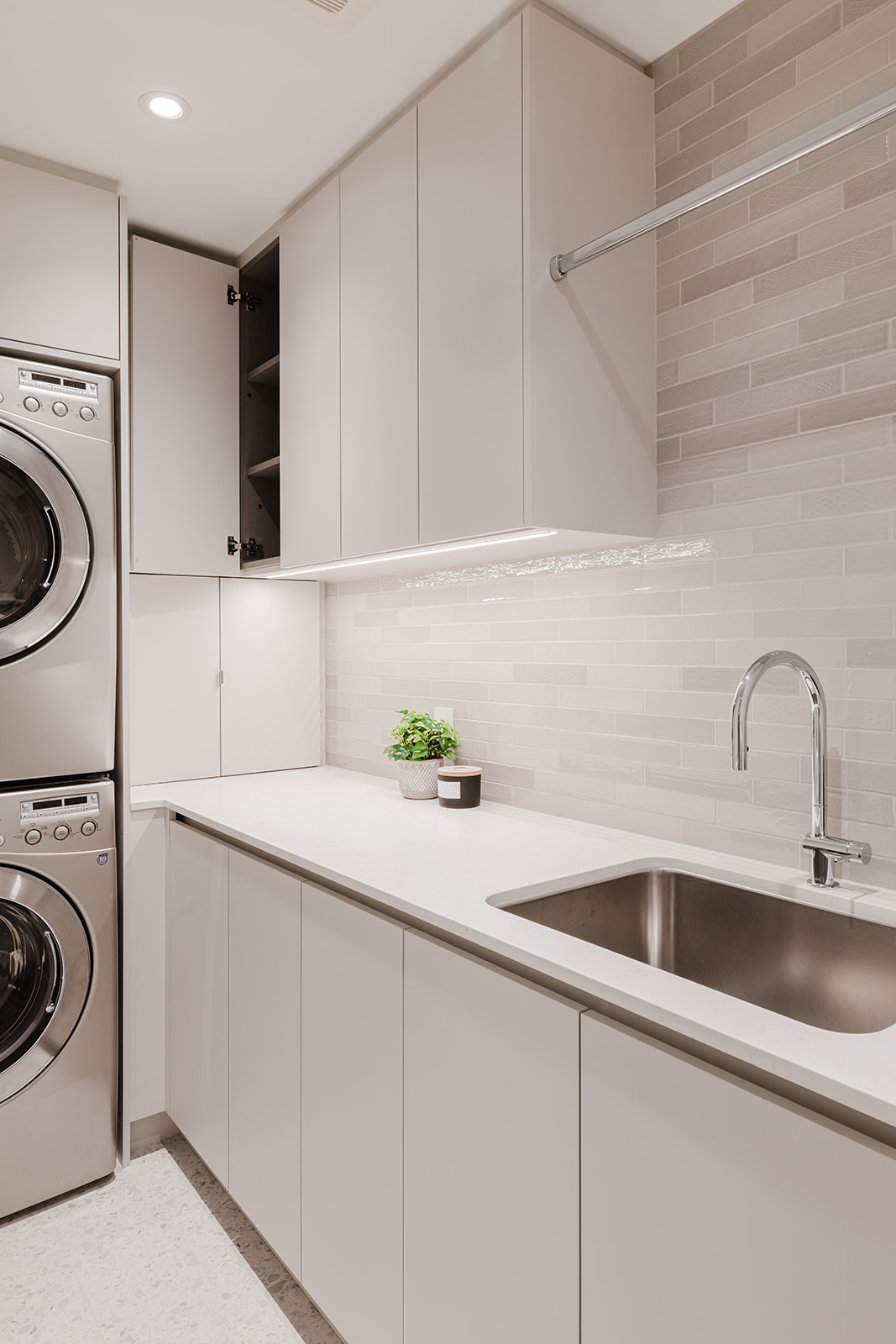
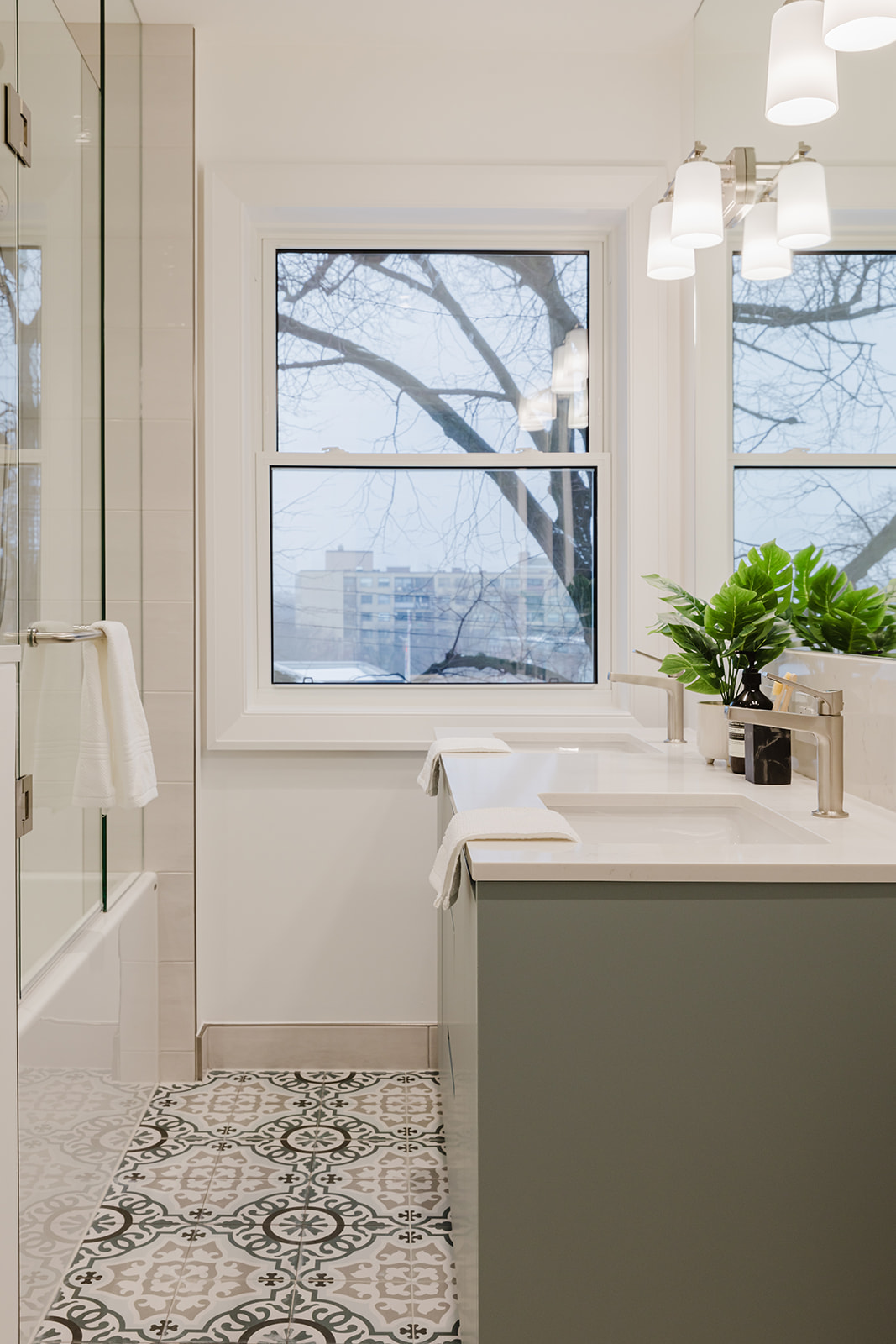
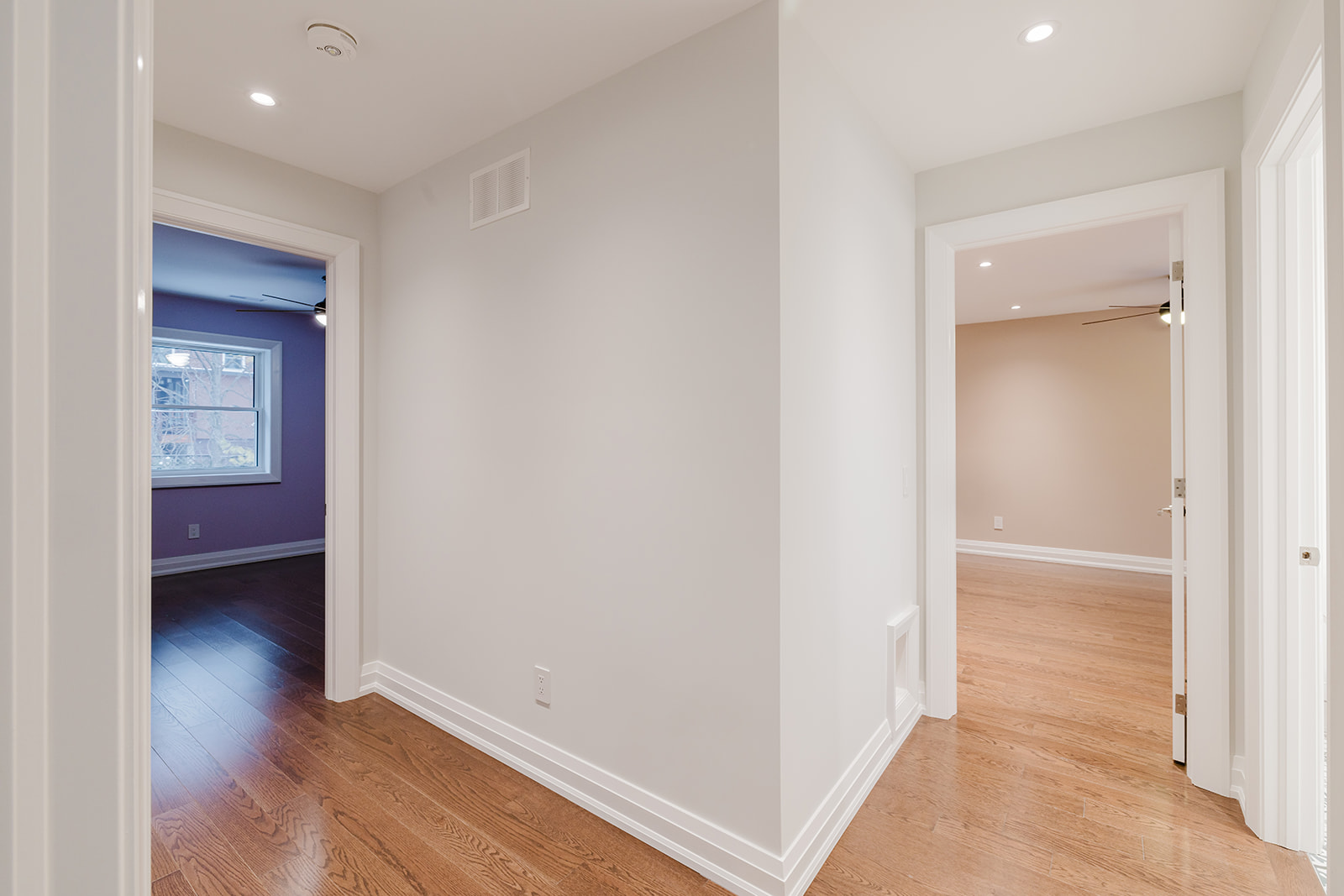
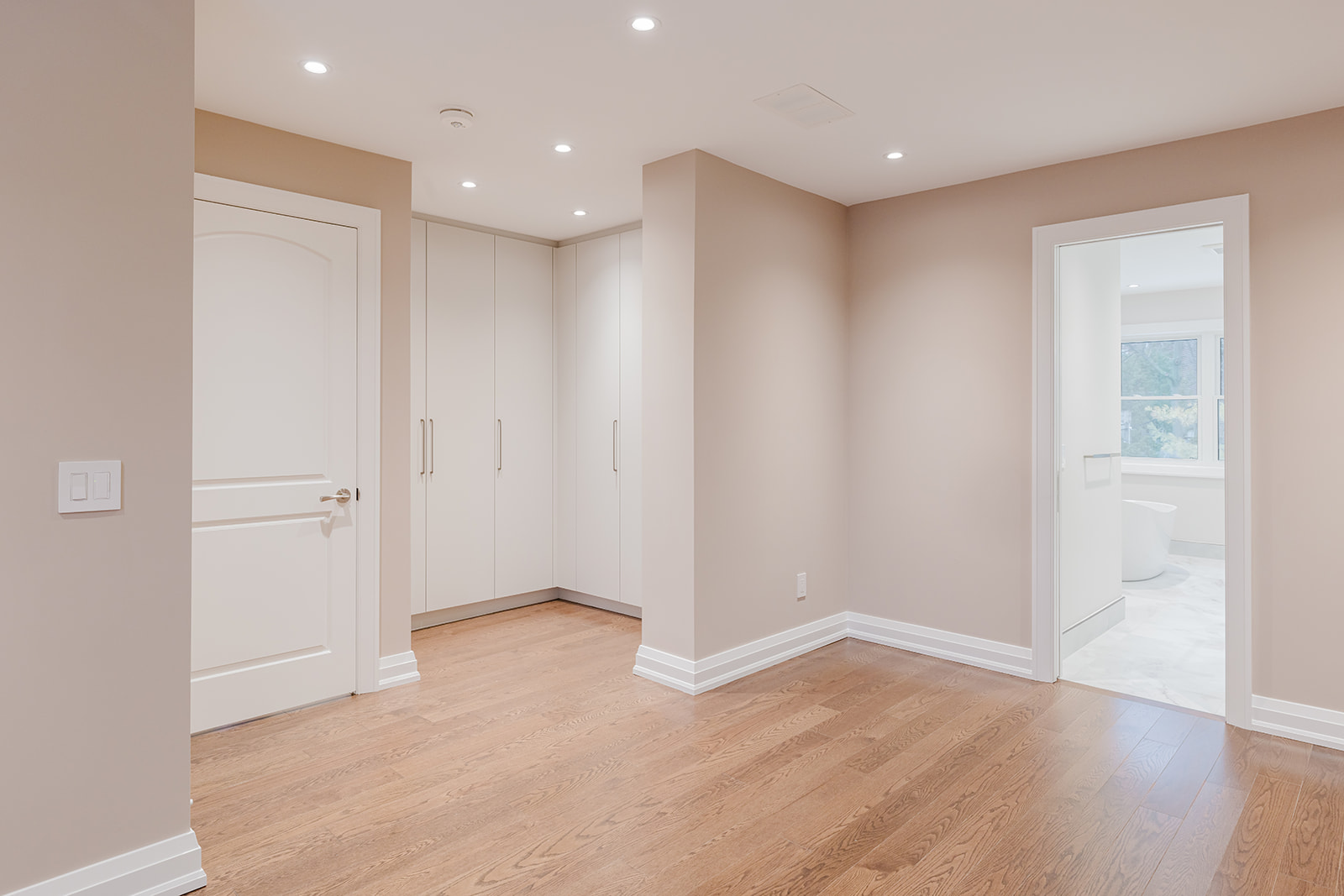
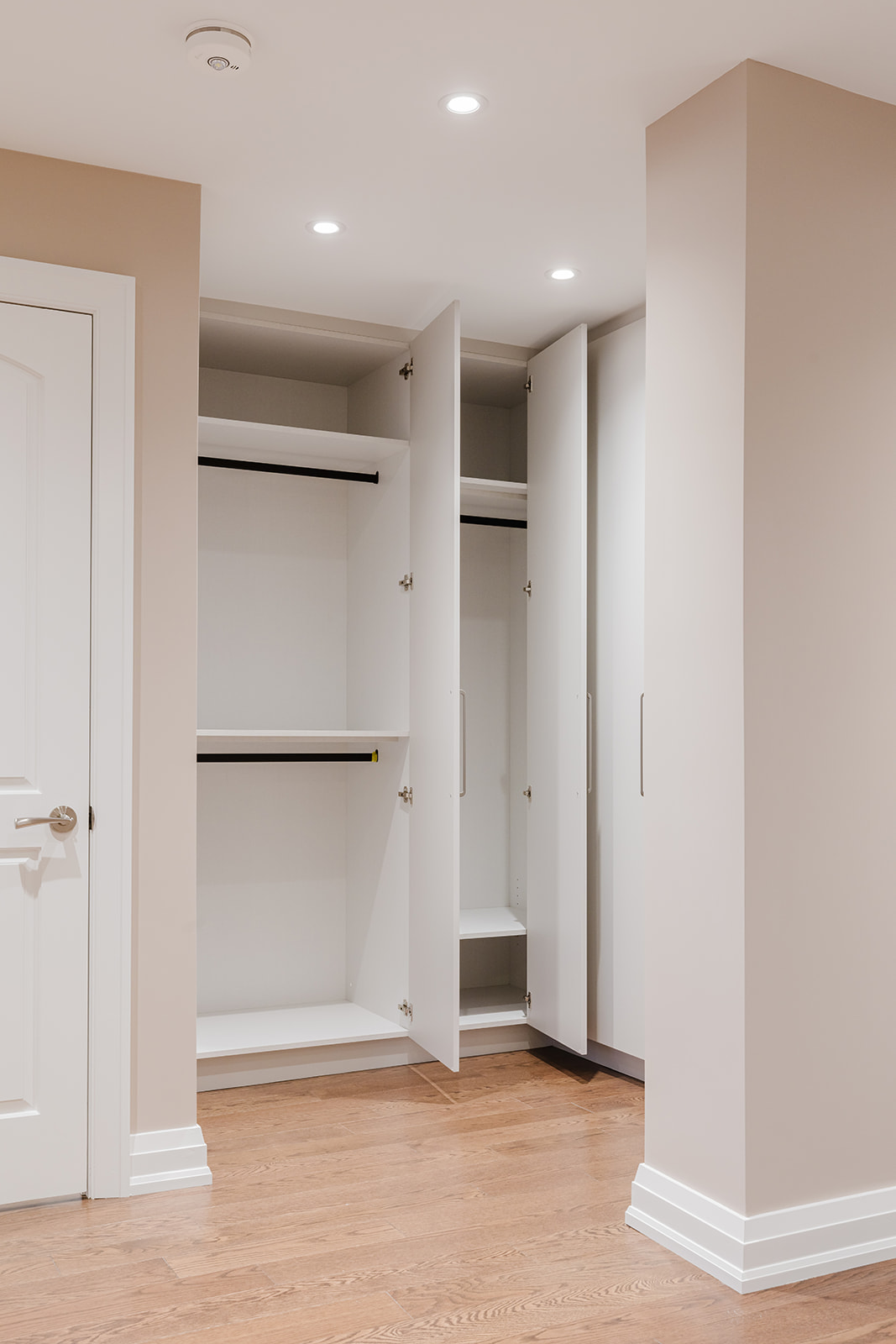
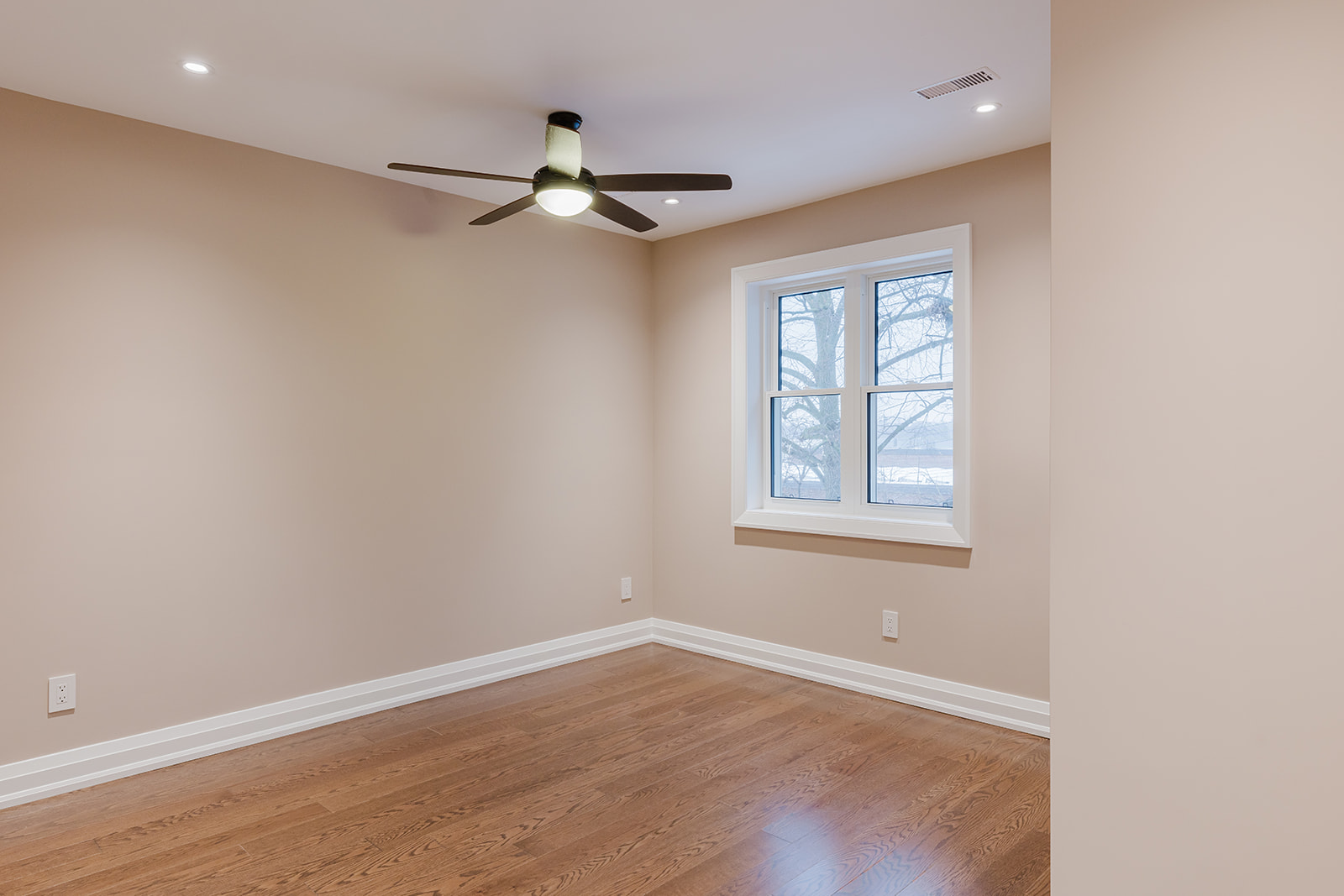
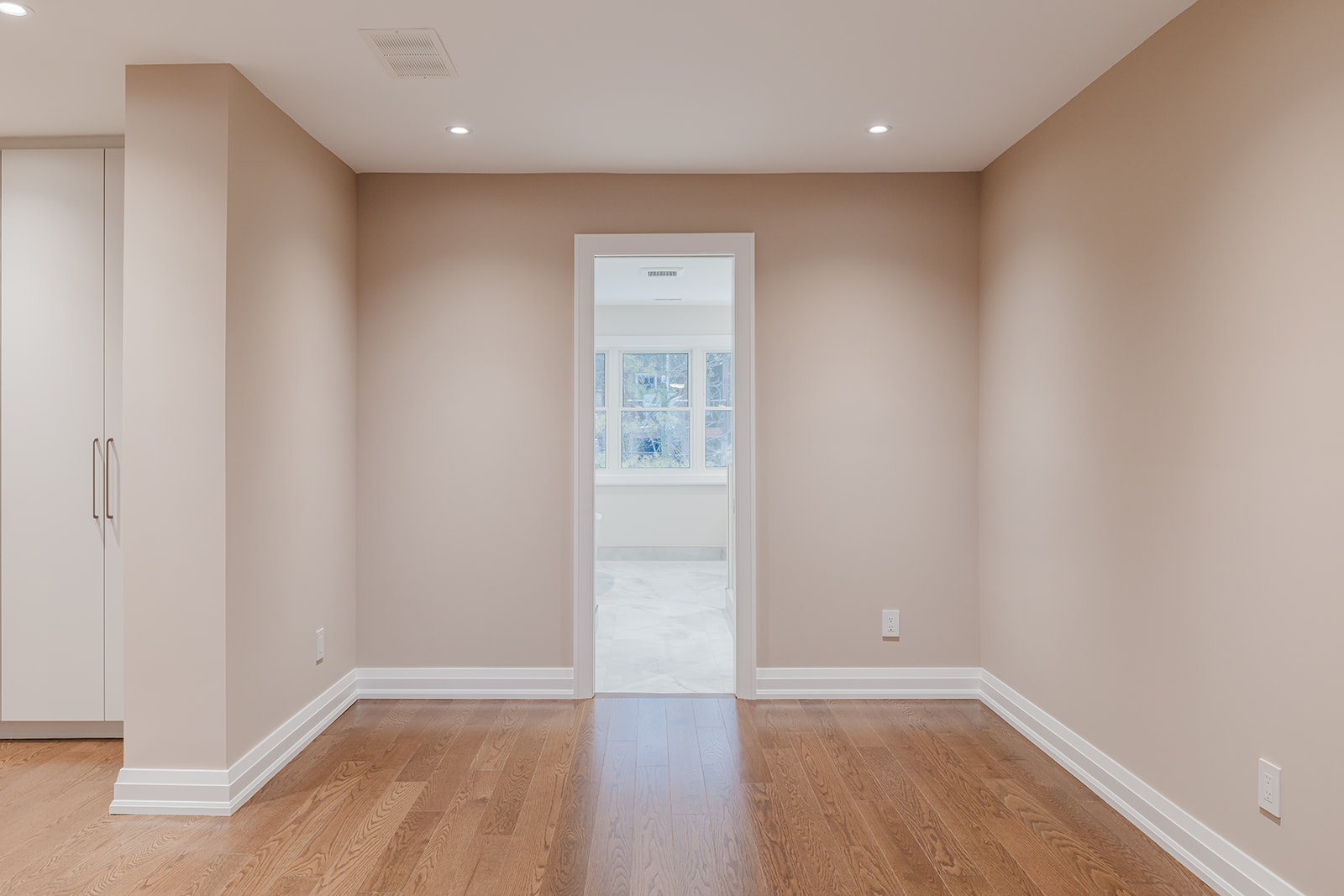
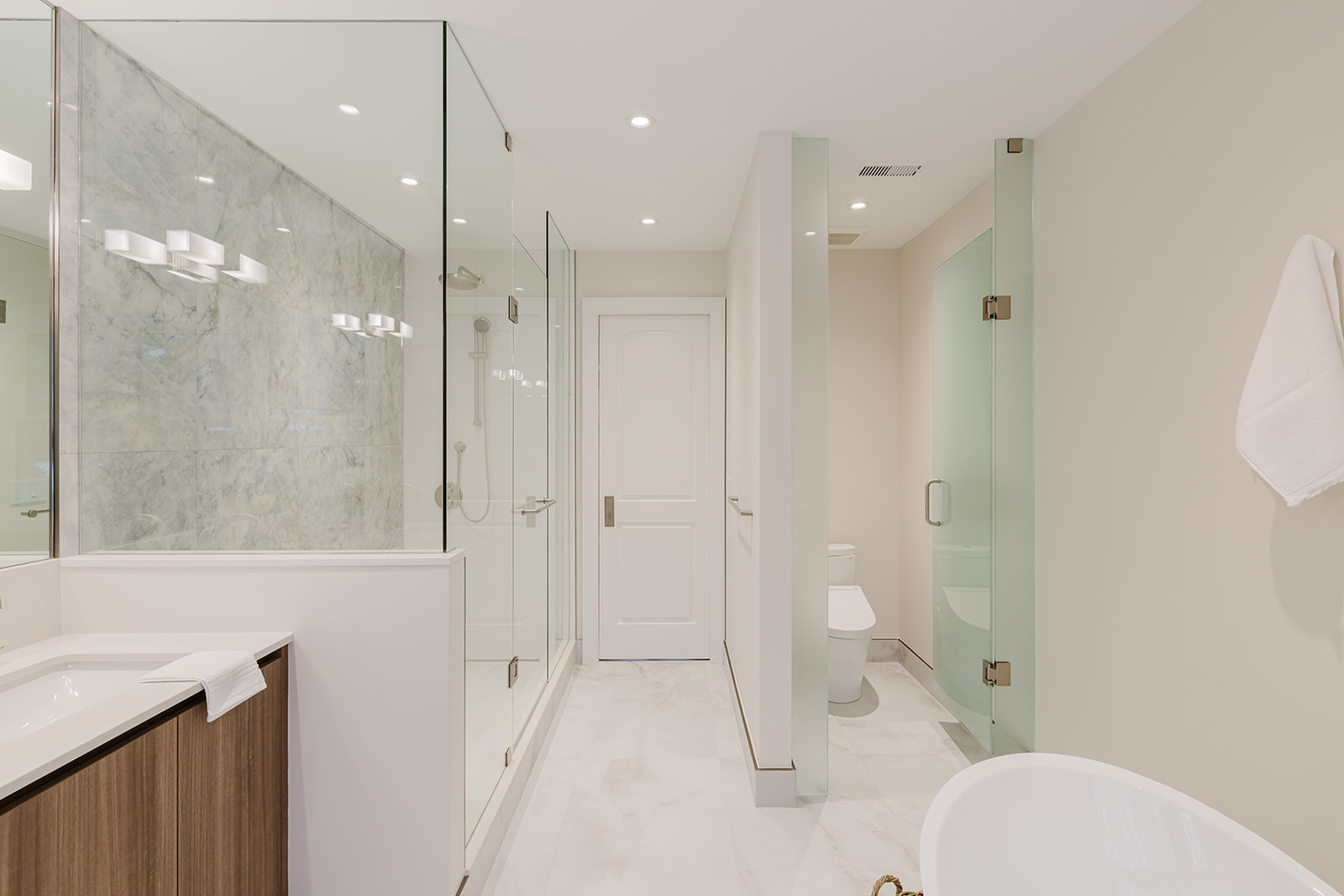
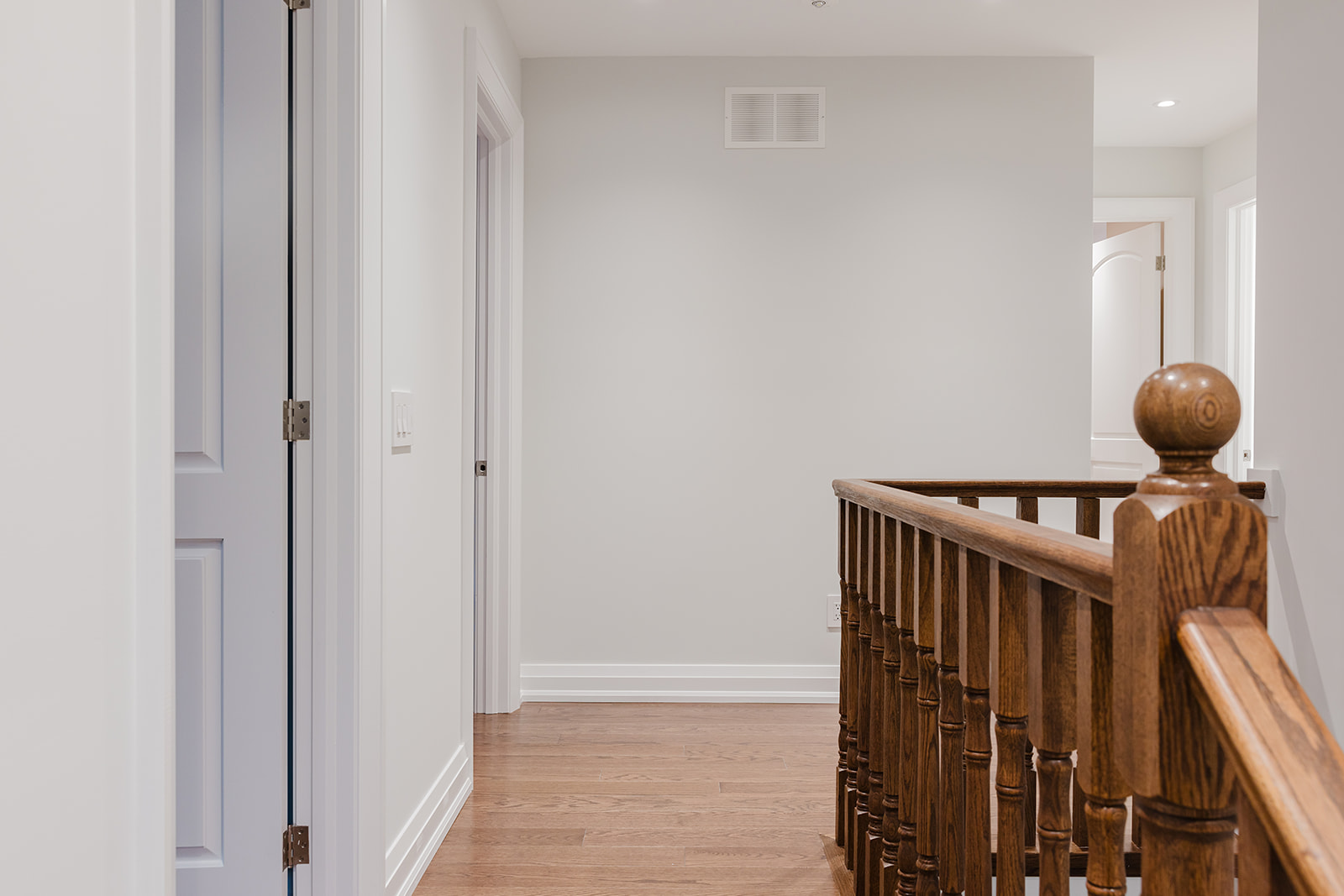
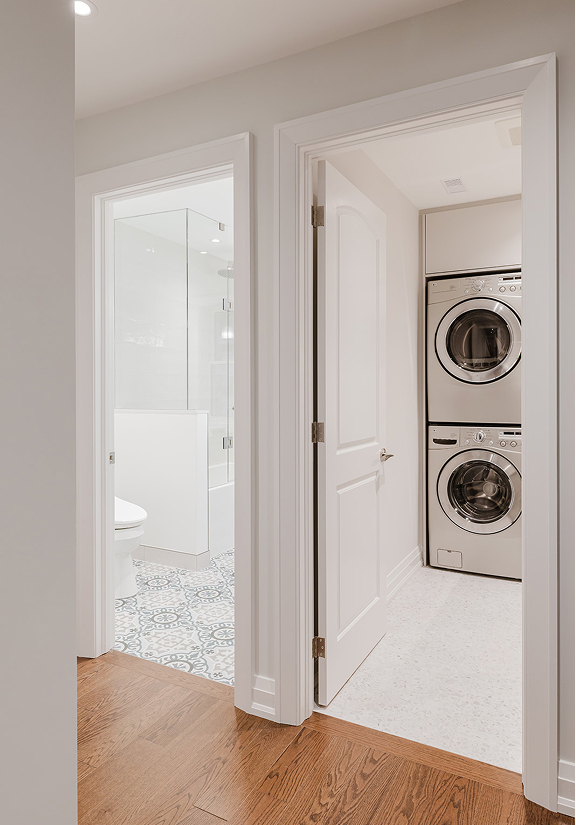
The second floor was reconfigured around the family’s daily routines, creating a new primary suite, improving privacy and circulation, relocating the main bathroom, reclaiming closet space, and introducing a dedicated laundry room. The revised layout also required significant structural work, including new beam support.
Making the new plan work within the existing structure required close coordination of structural, plumbing, mechanical, electrical, and interior design work. The team upgraded the HVAC and electrical systems, opened previously uninsulated areas, and addressed them to improve comfort and long-term performance.
Golden Bee Homes adapted its plans as unexpected issues arose during construction, coordinated the necessary work, and kept the homeowners informed throughout the process.
The Details
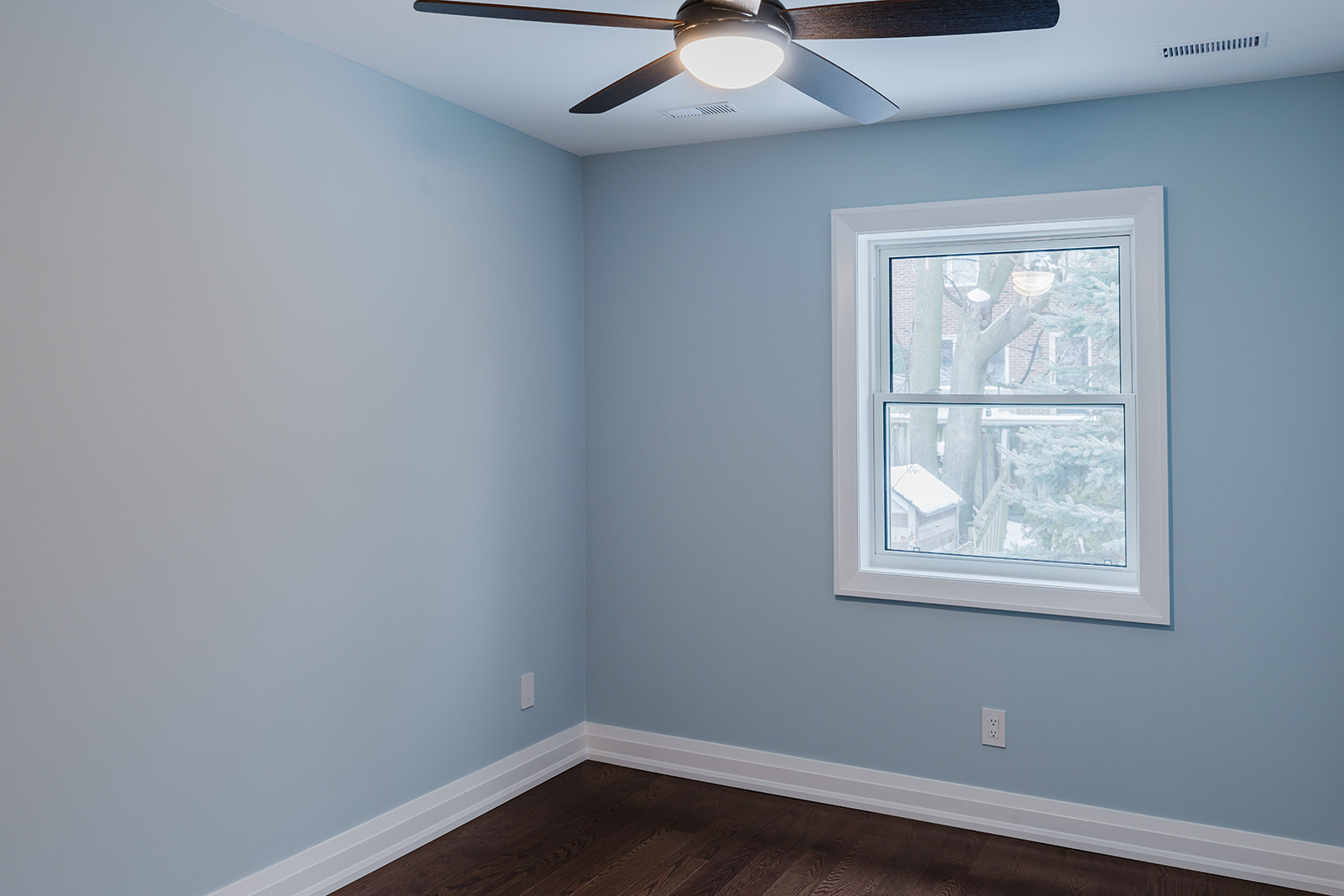
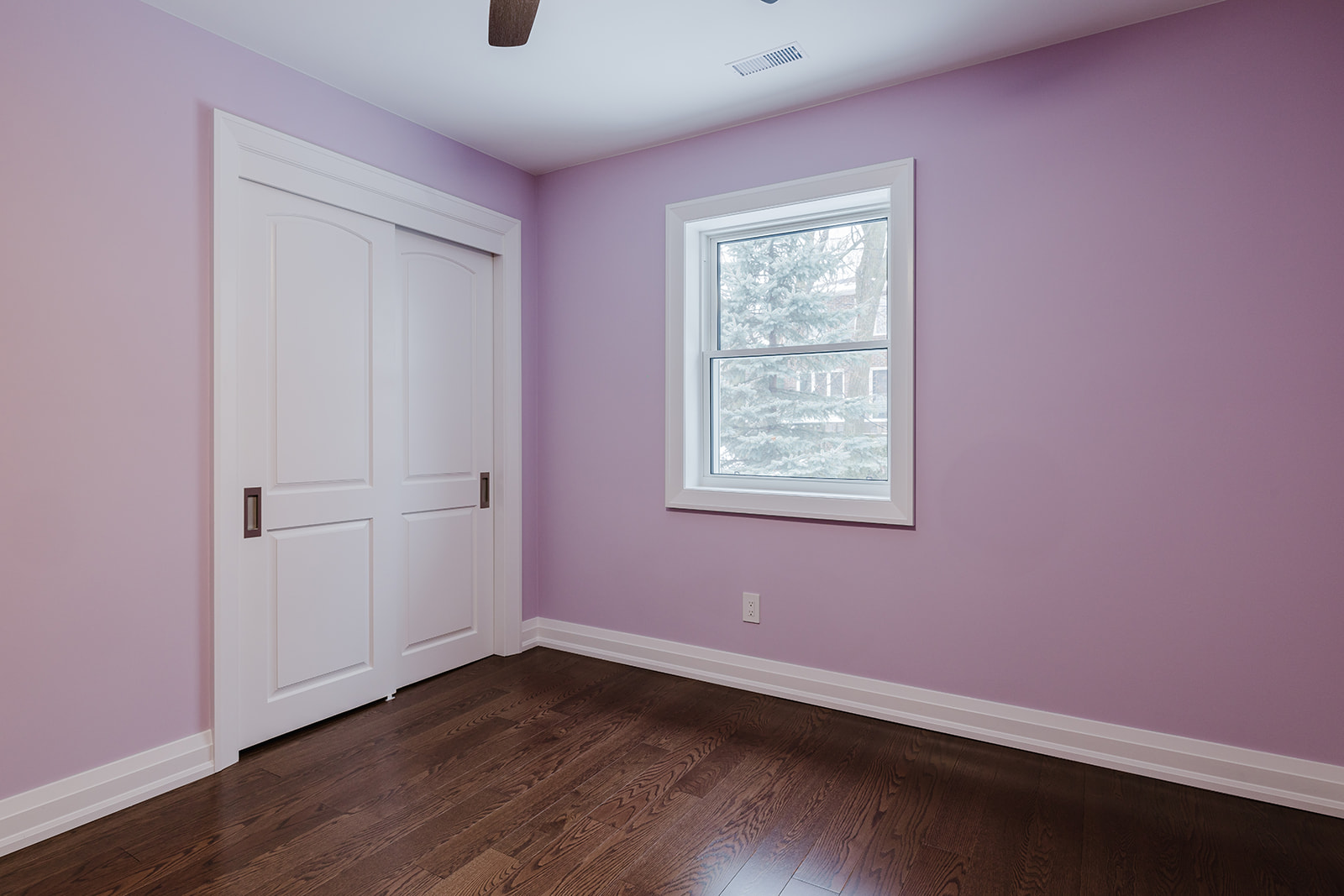
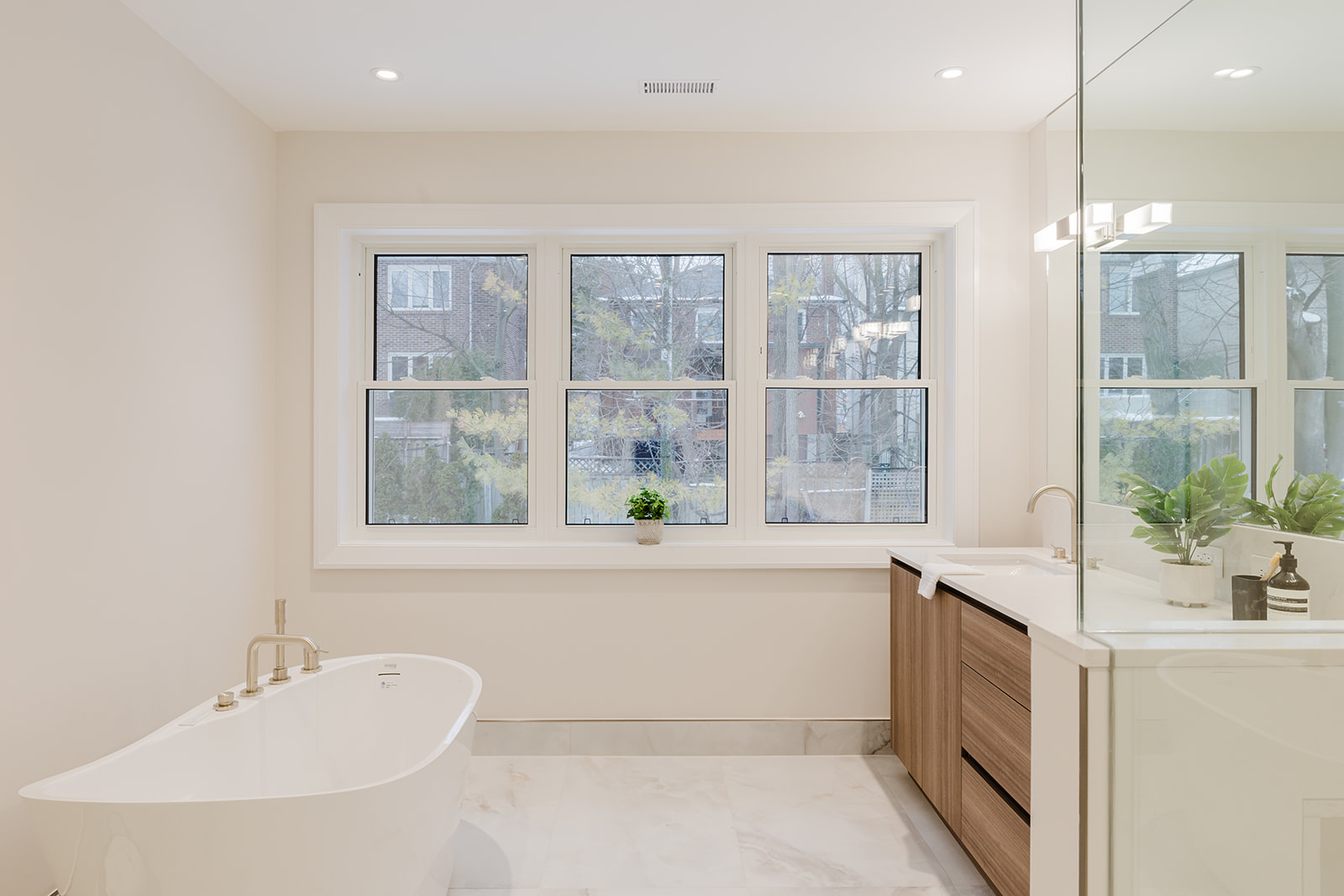
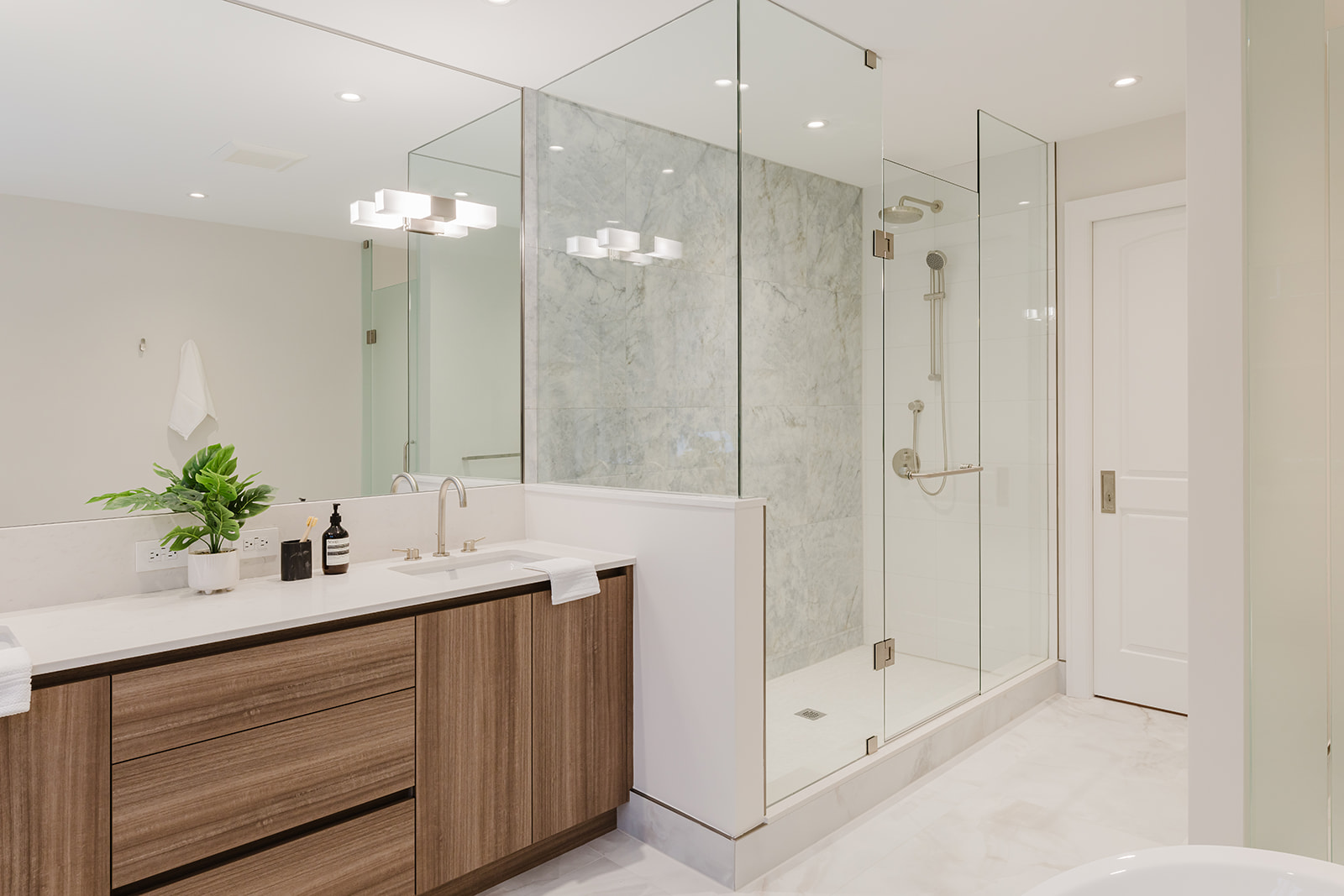
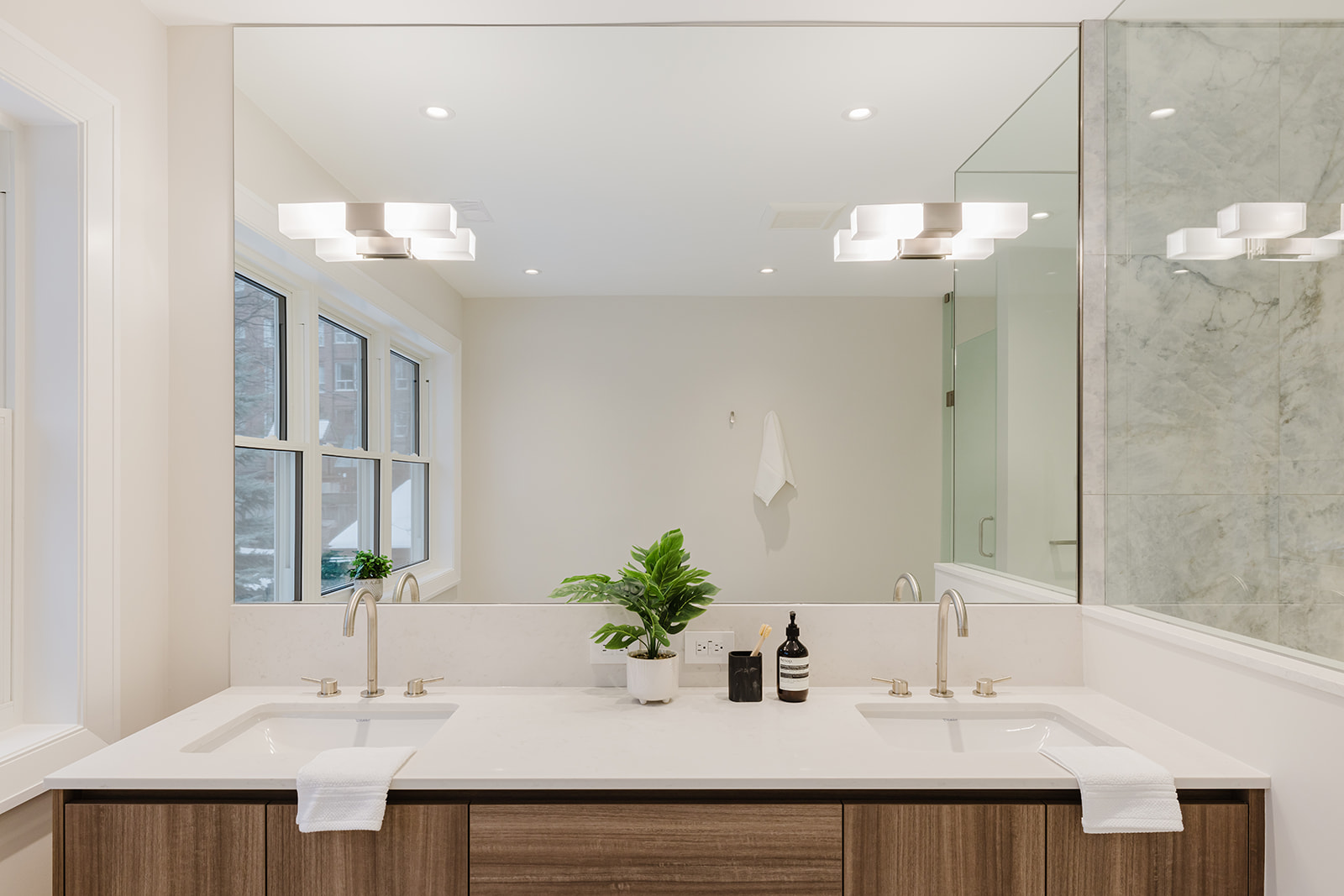
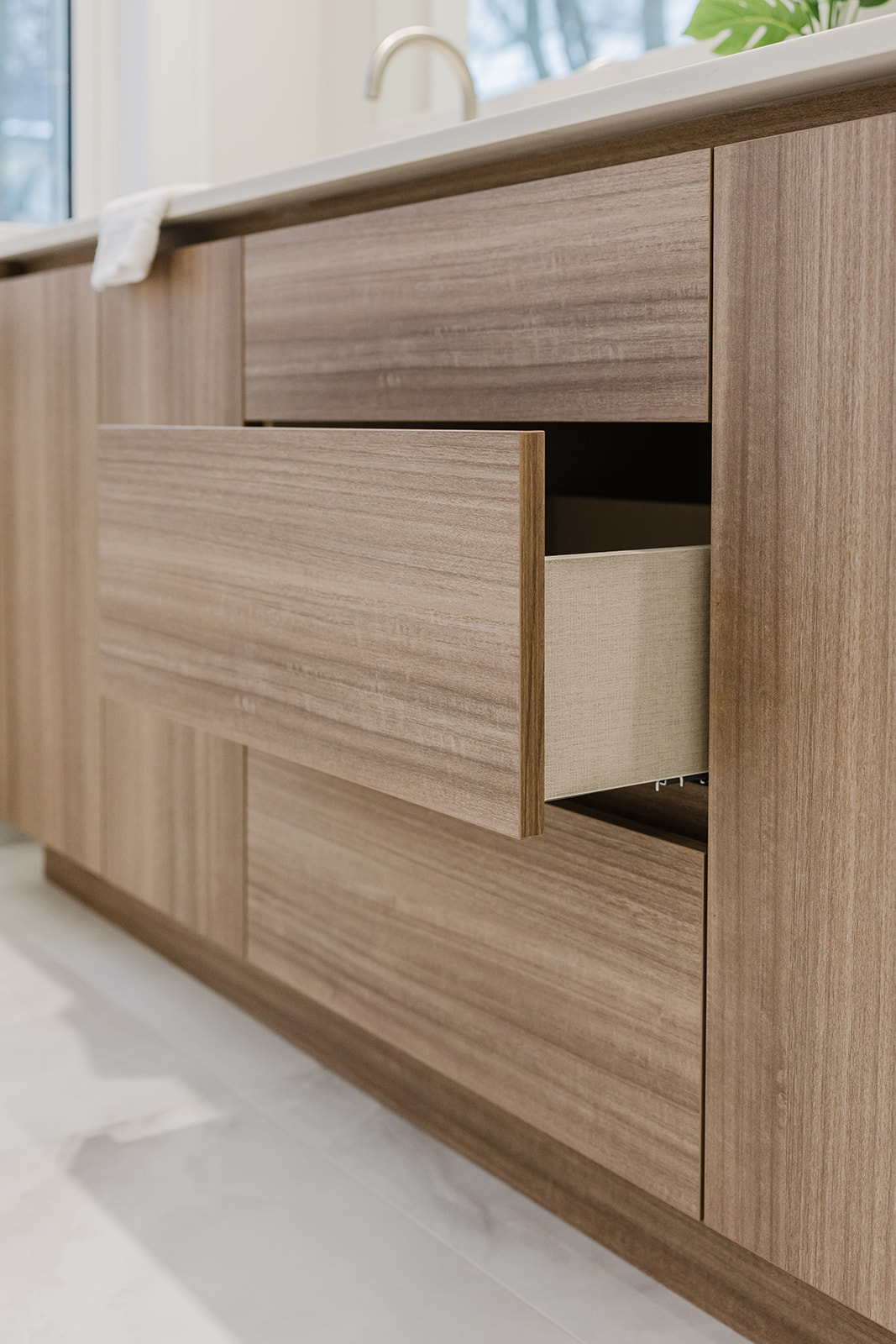
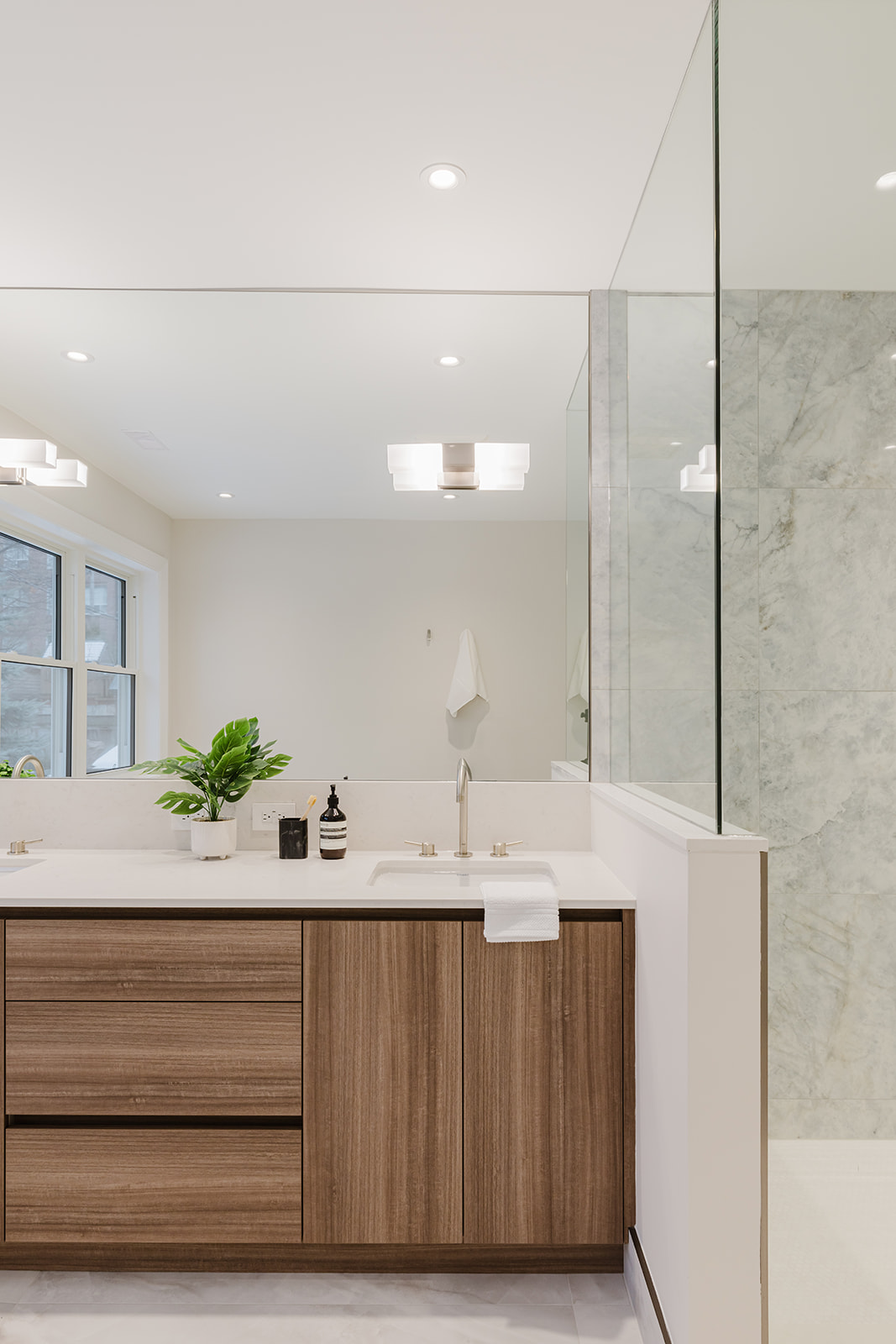
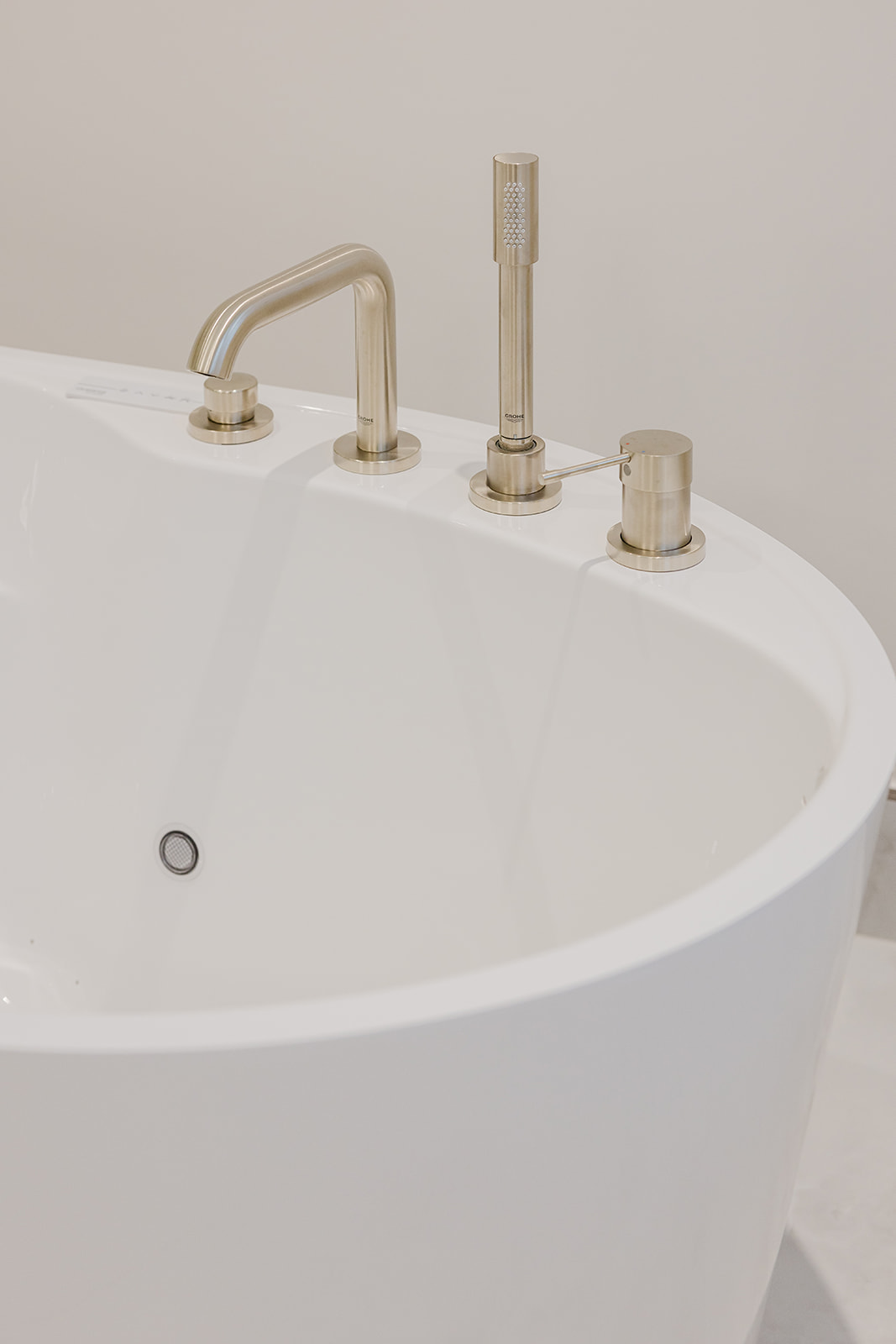
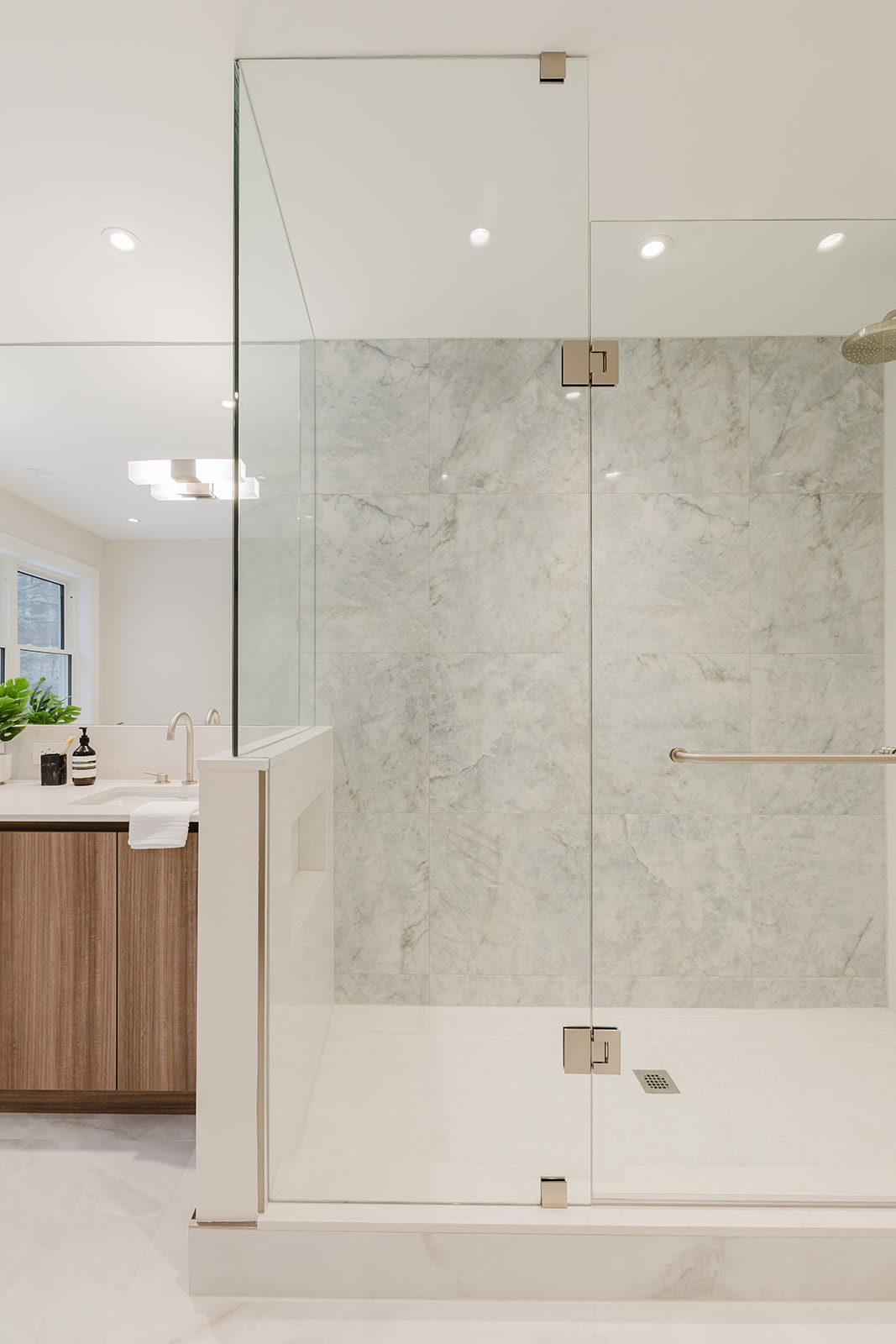
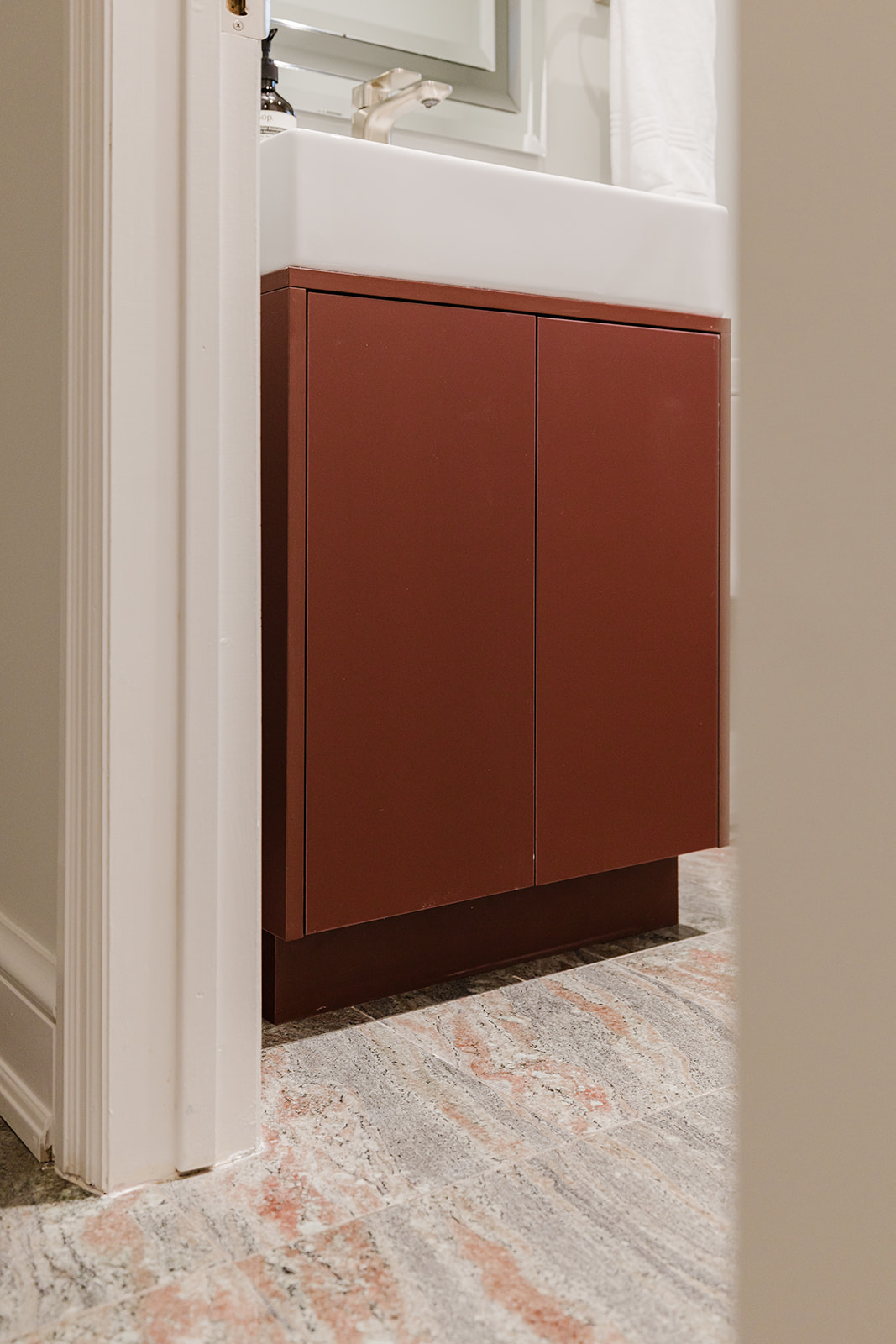
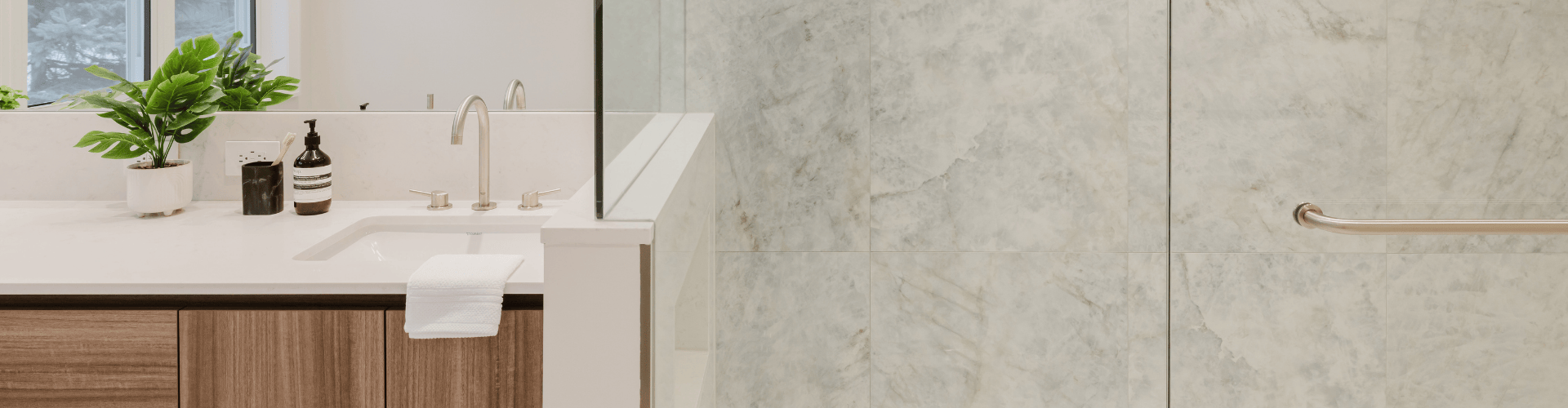
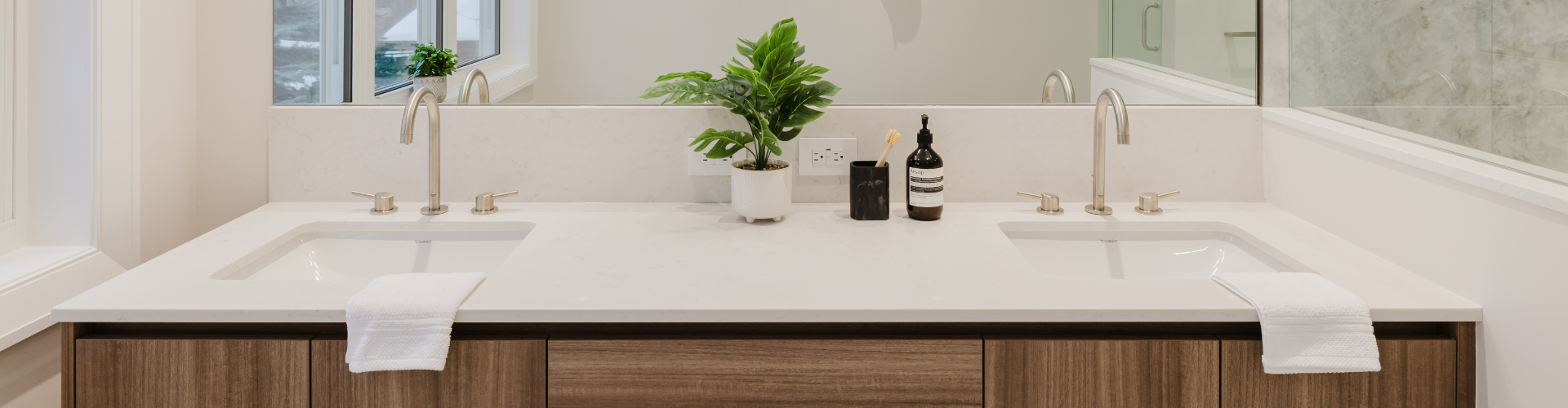
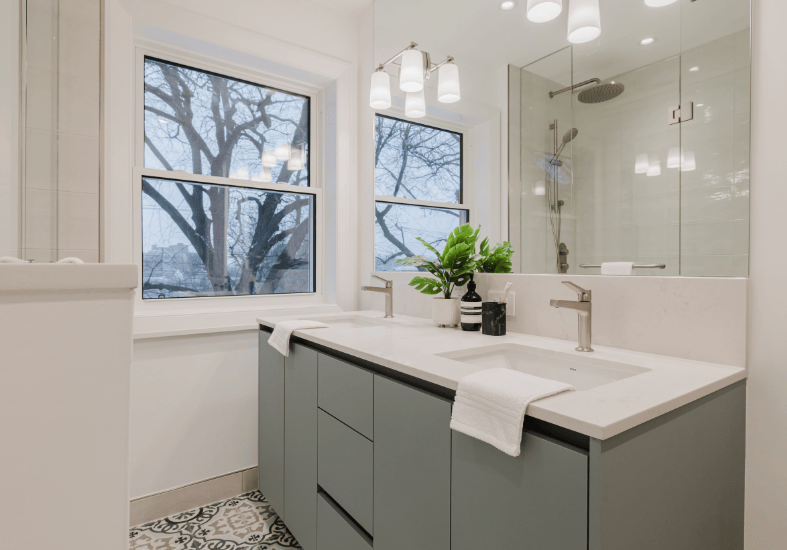
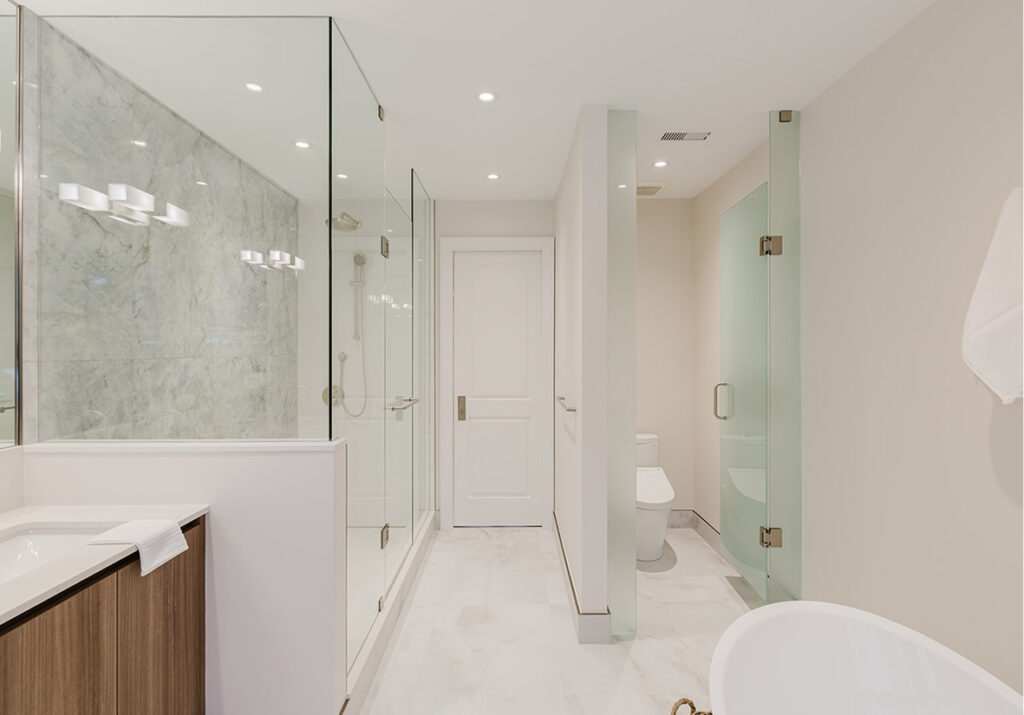
The design takes a contemporary approach, combining warm wood cabinetry with crisp white surfaces and clean architectural lines. Consistent materials and finishes run throughout the home, creating visual continuity between the original and renovated areas.
- Continuous hardwood flooring throughout the renovated areas
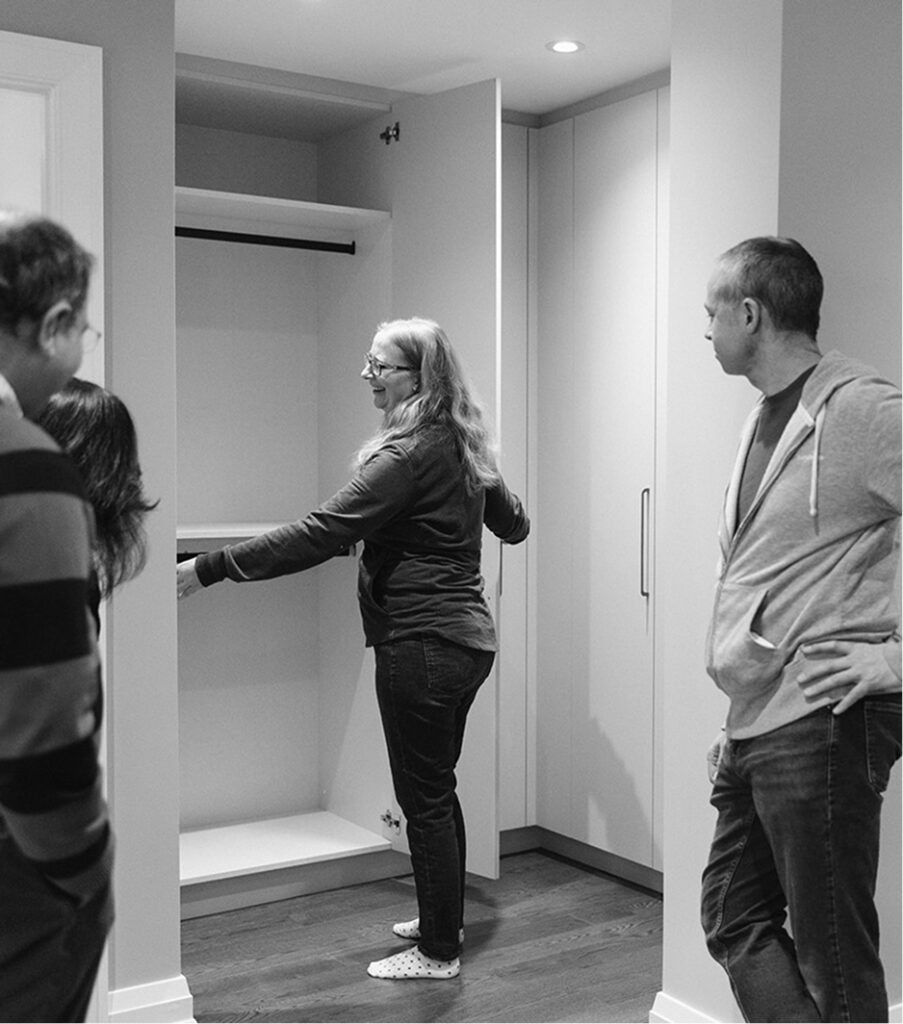
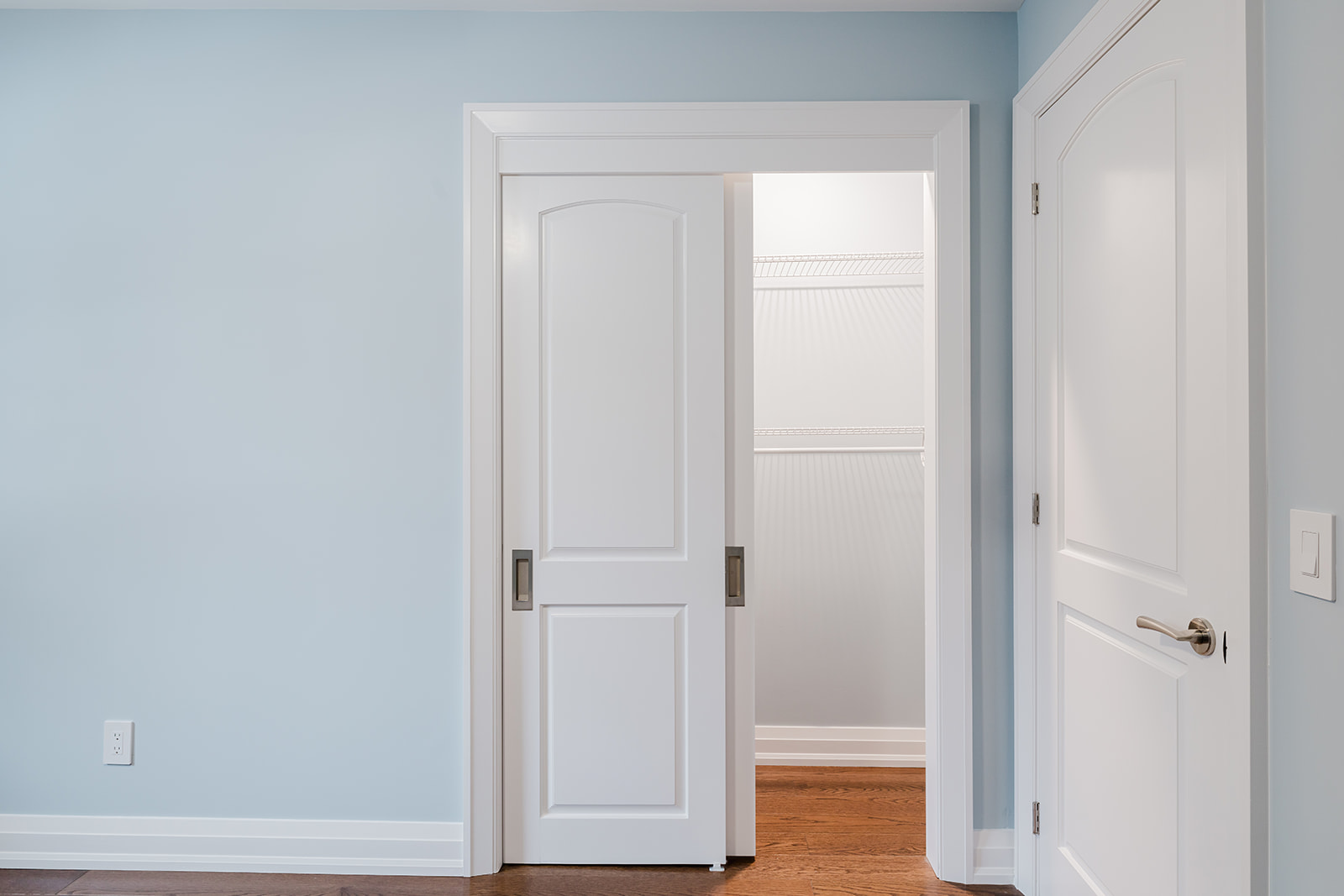
- Custom millwork and built-in storage
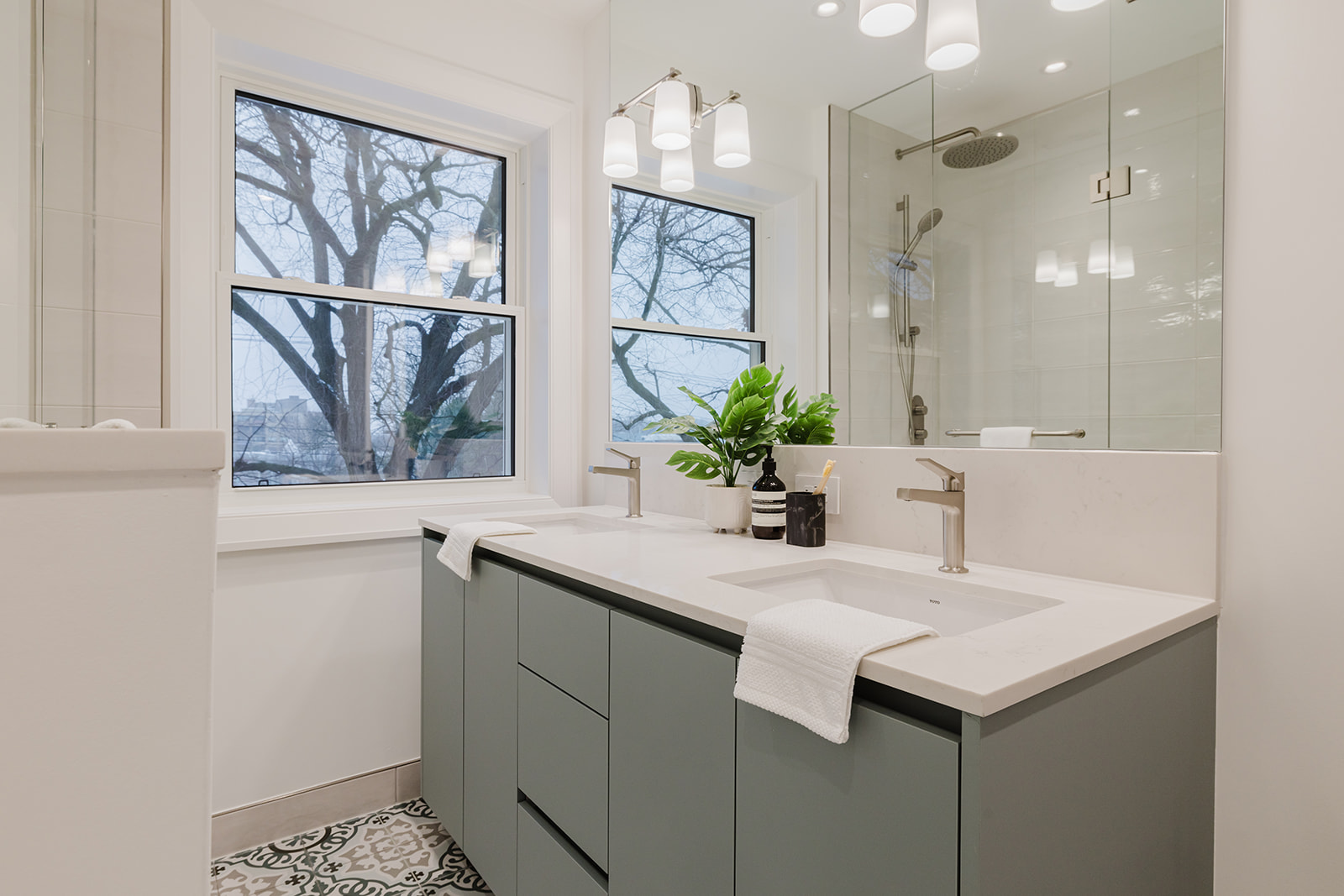
- Warm wood cabinetry
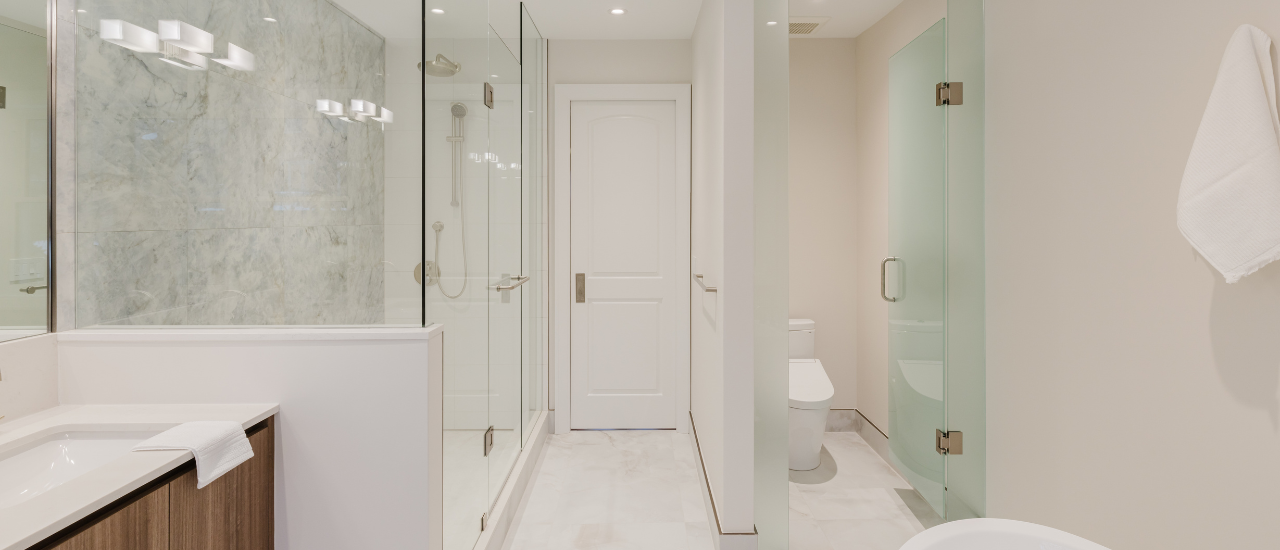
- Quartz countertops and shower curbs
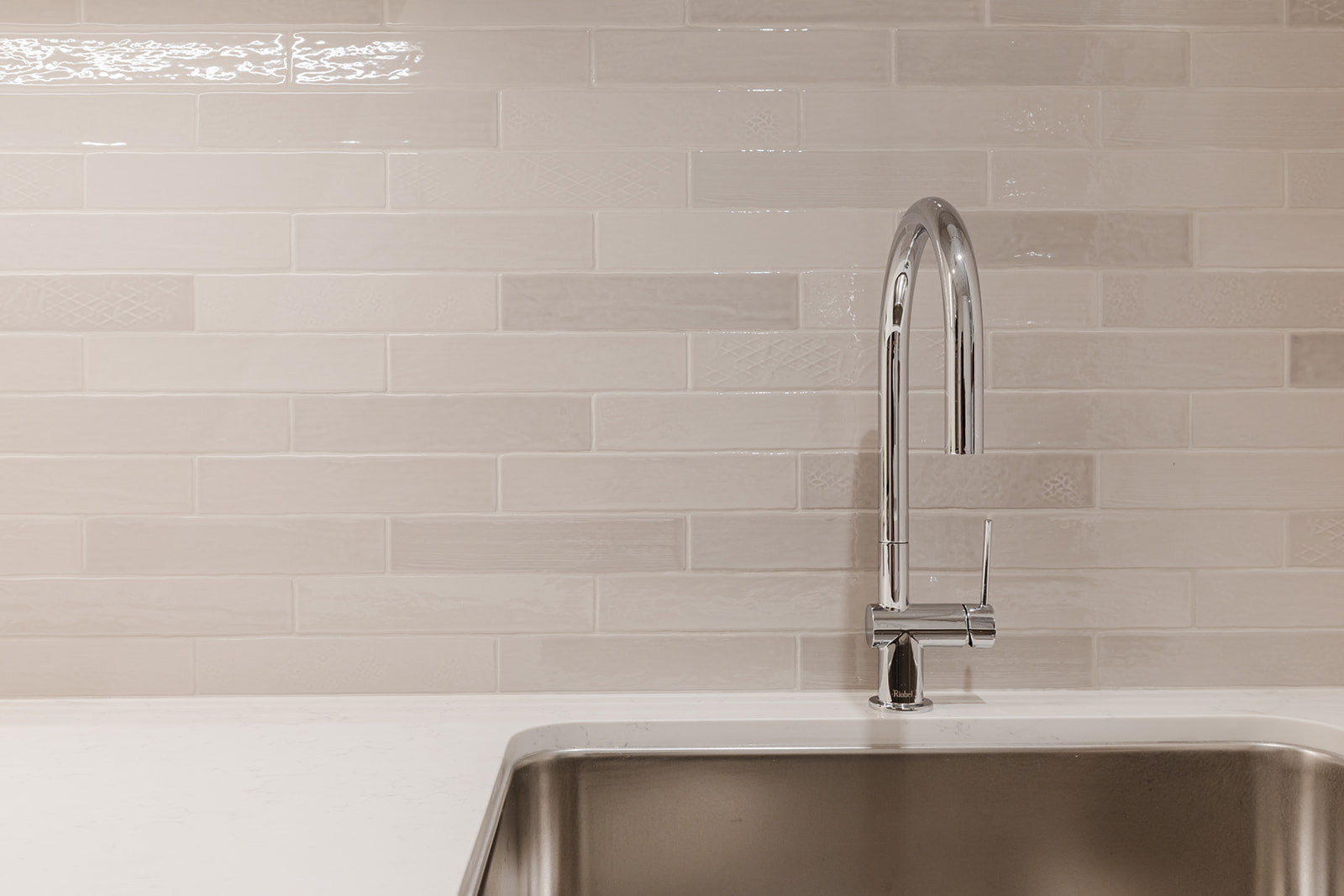
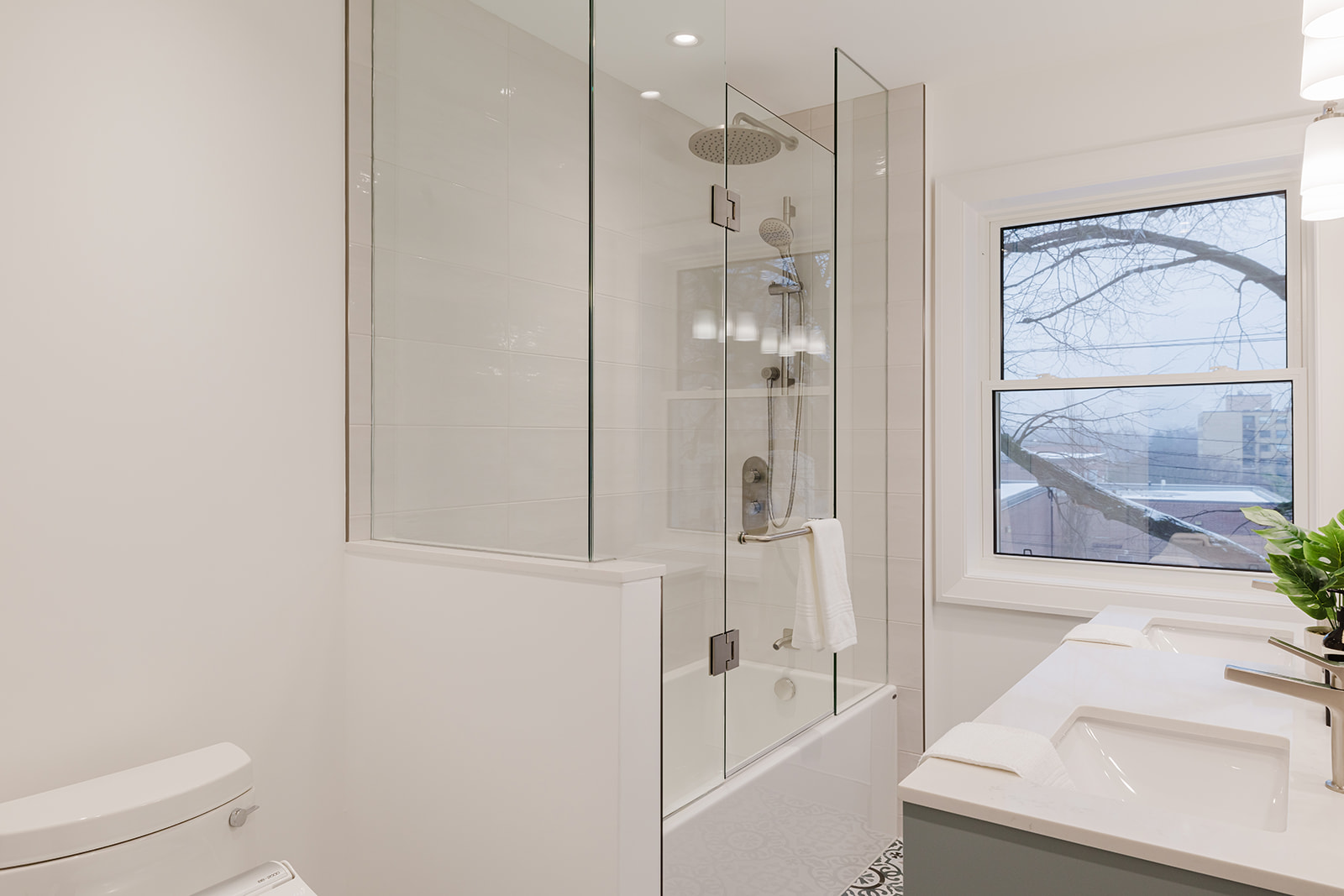
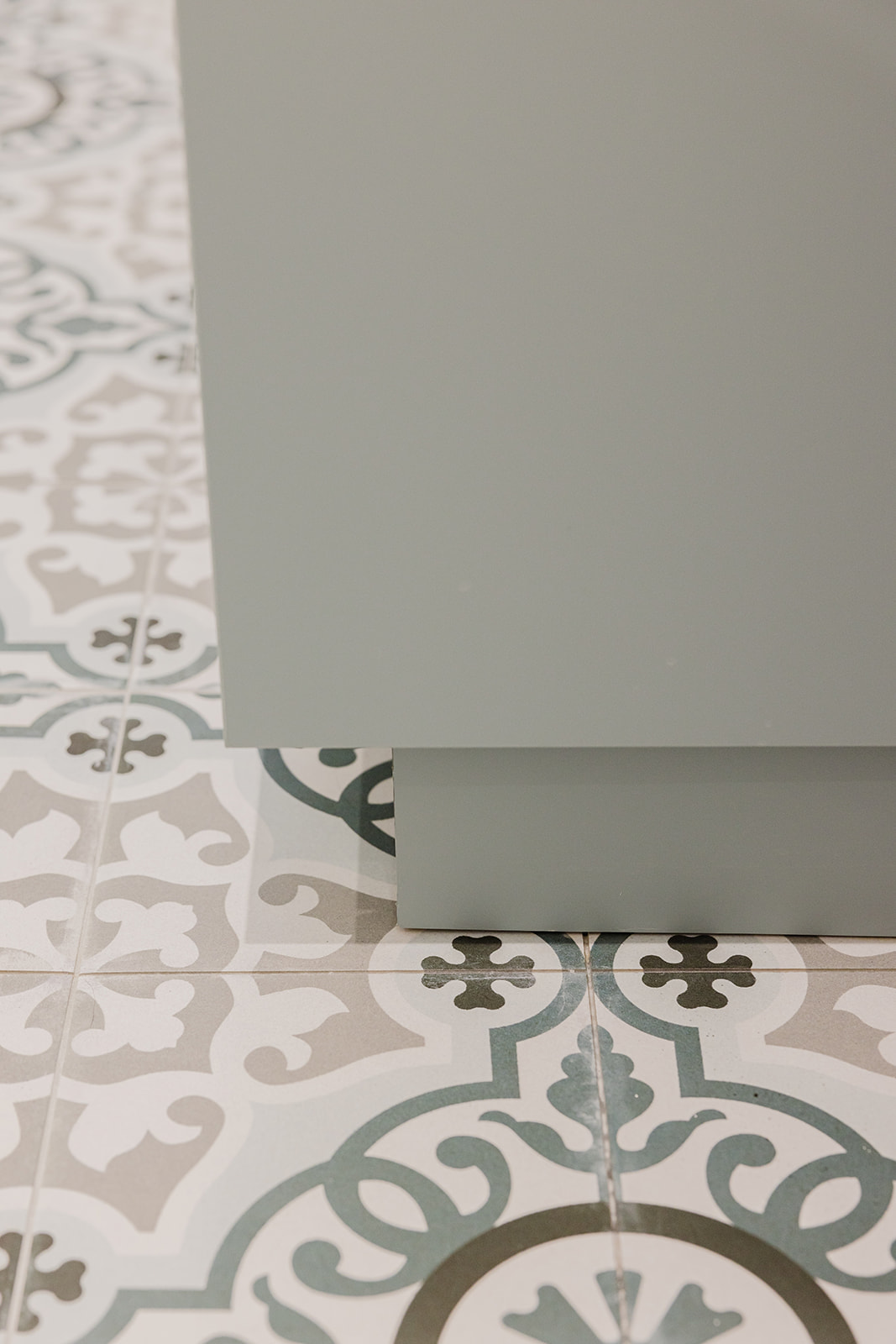
- Large-format tile flooring, shower walls, and backsplashes
- Frameless glass shower enclosures with low-threshold access
- Matching trim and casings
- Modern hardware and contemporary fixtures
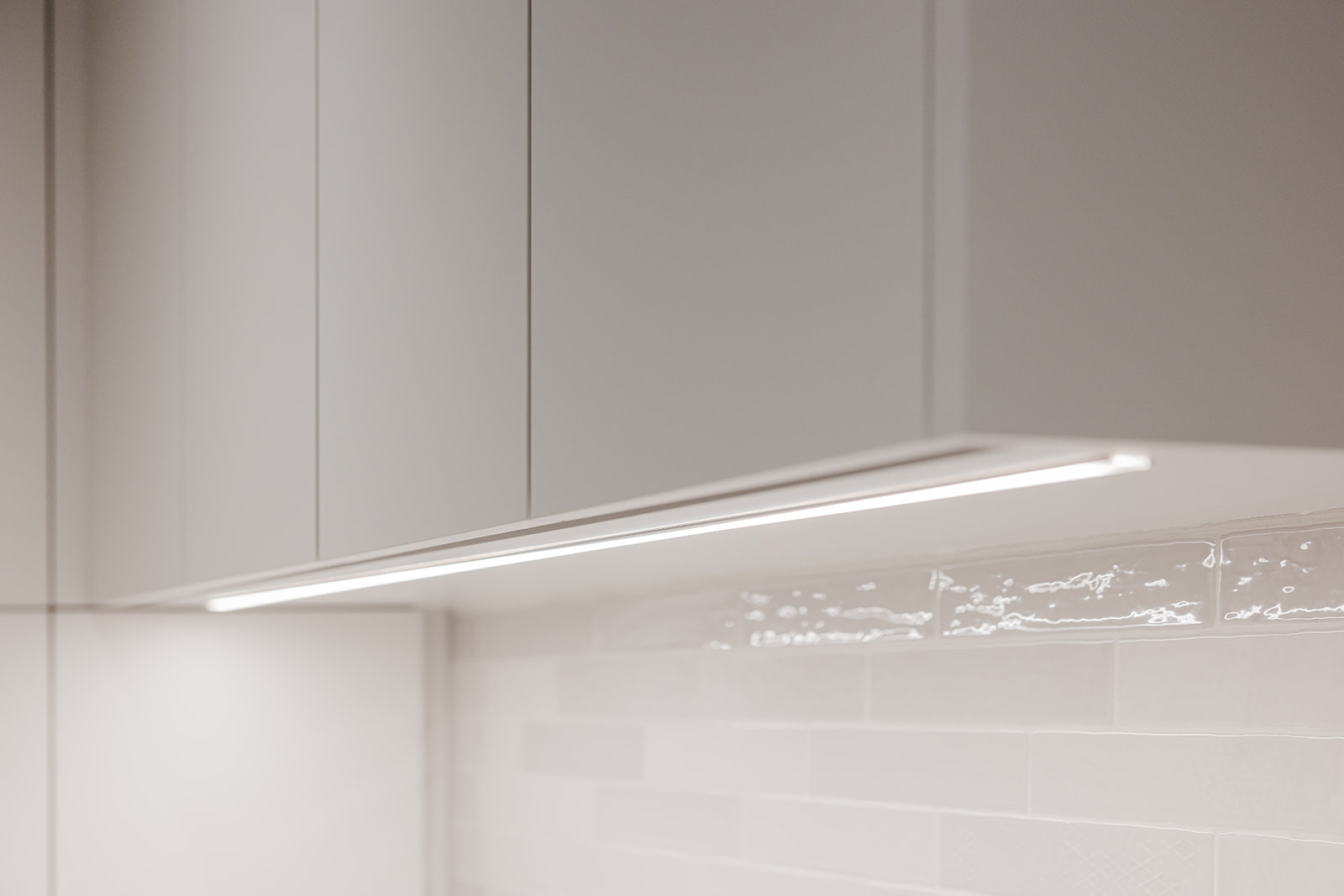
- Integrated lighting and pot lights
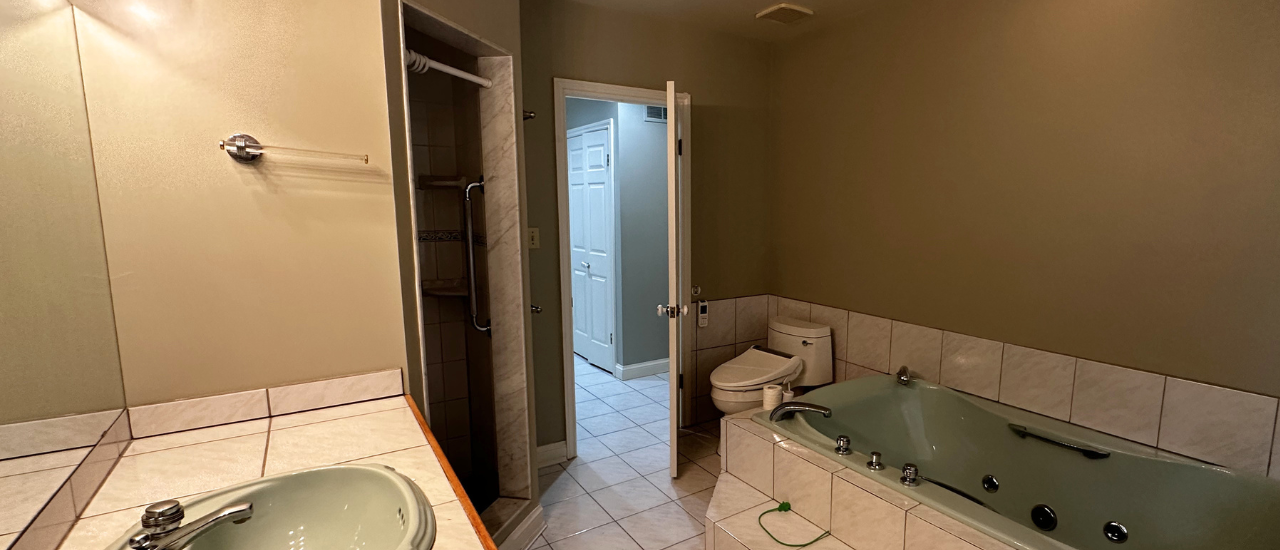
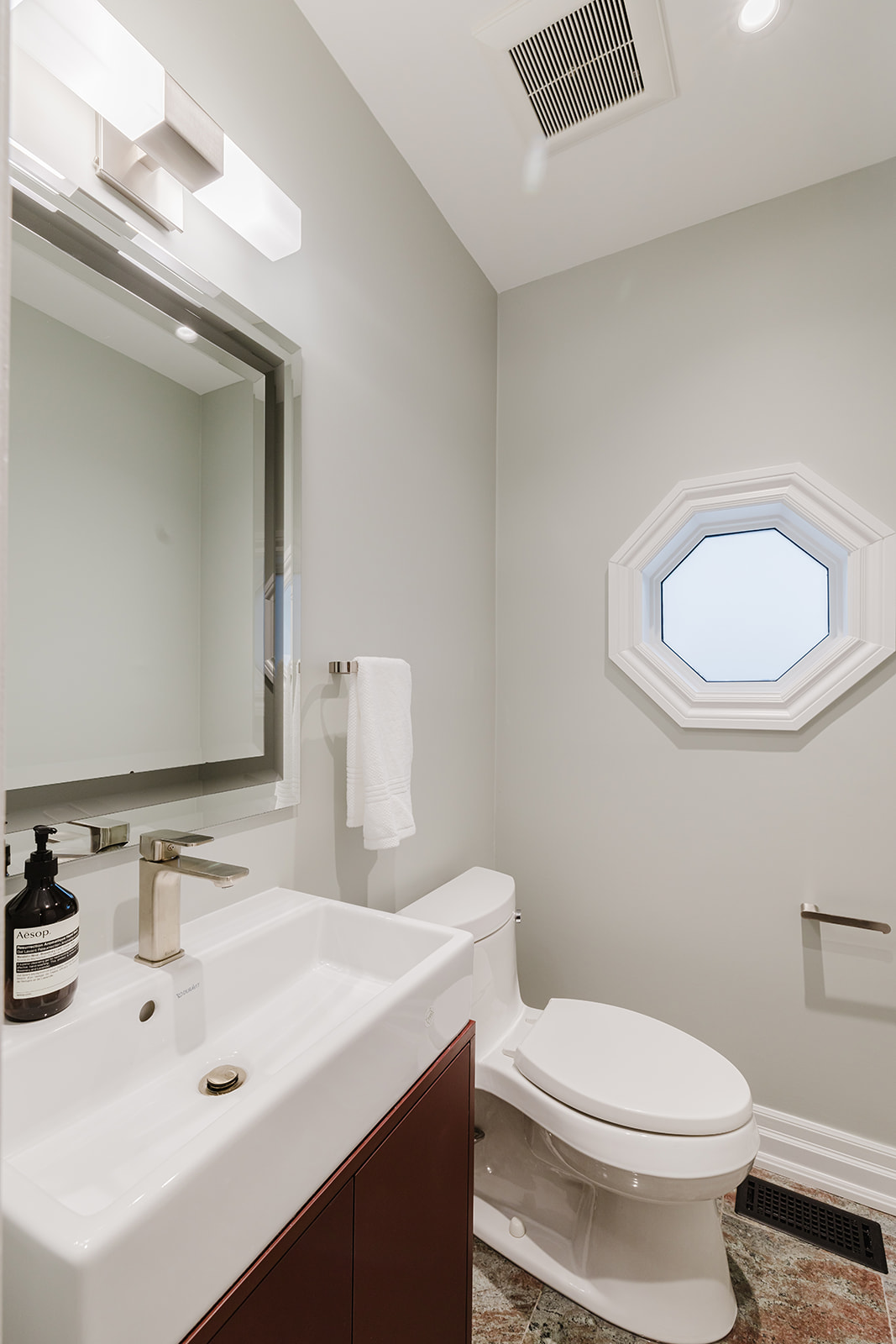
- Redesigned bathrooms with improved layouts, generous storage, and durable finishes
- Dedicated second-floor laundry room
- New rear deck extending the home’s living space
- Added insulation and basement waterproofing
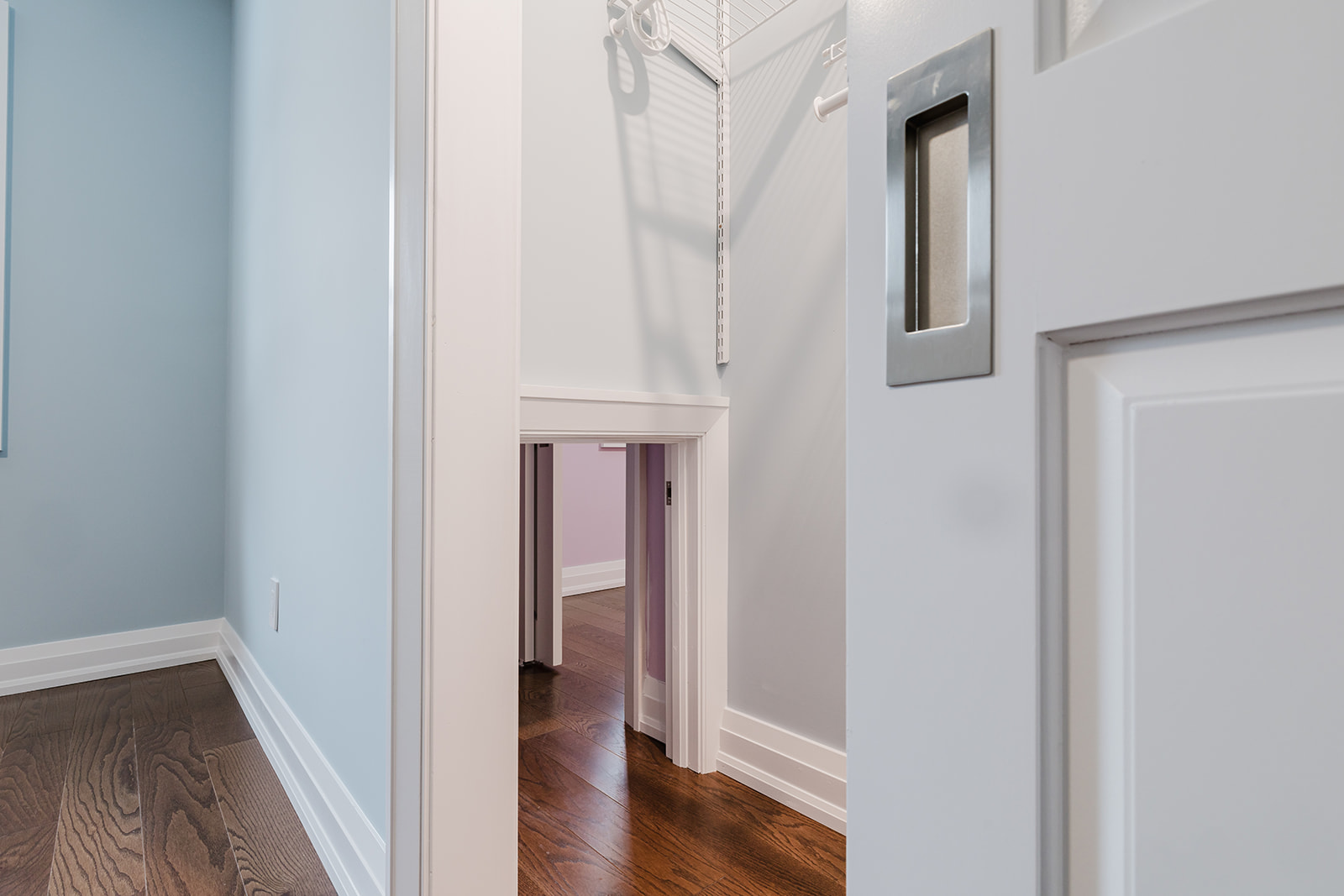
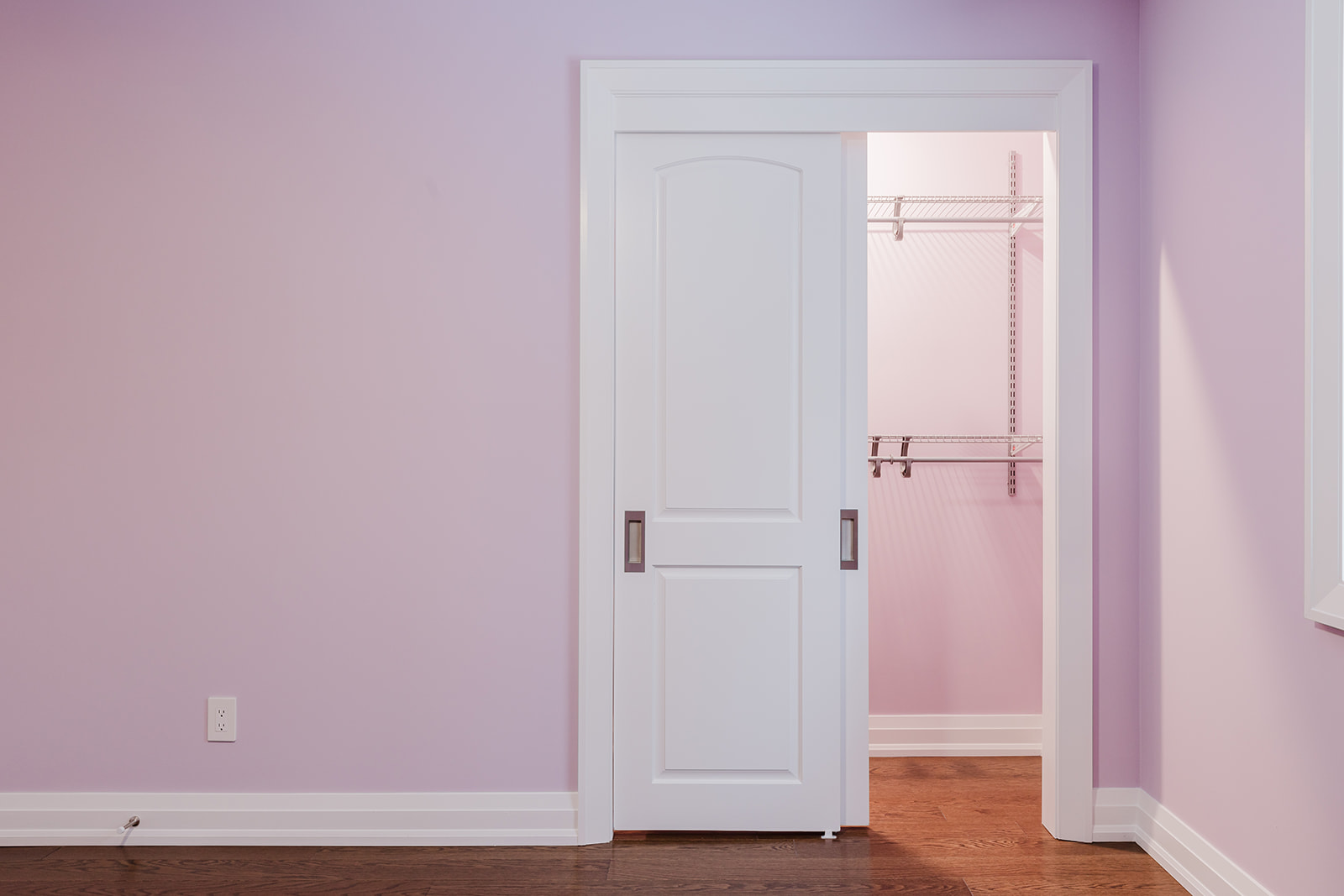
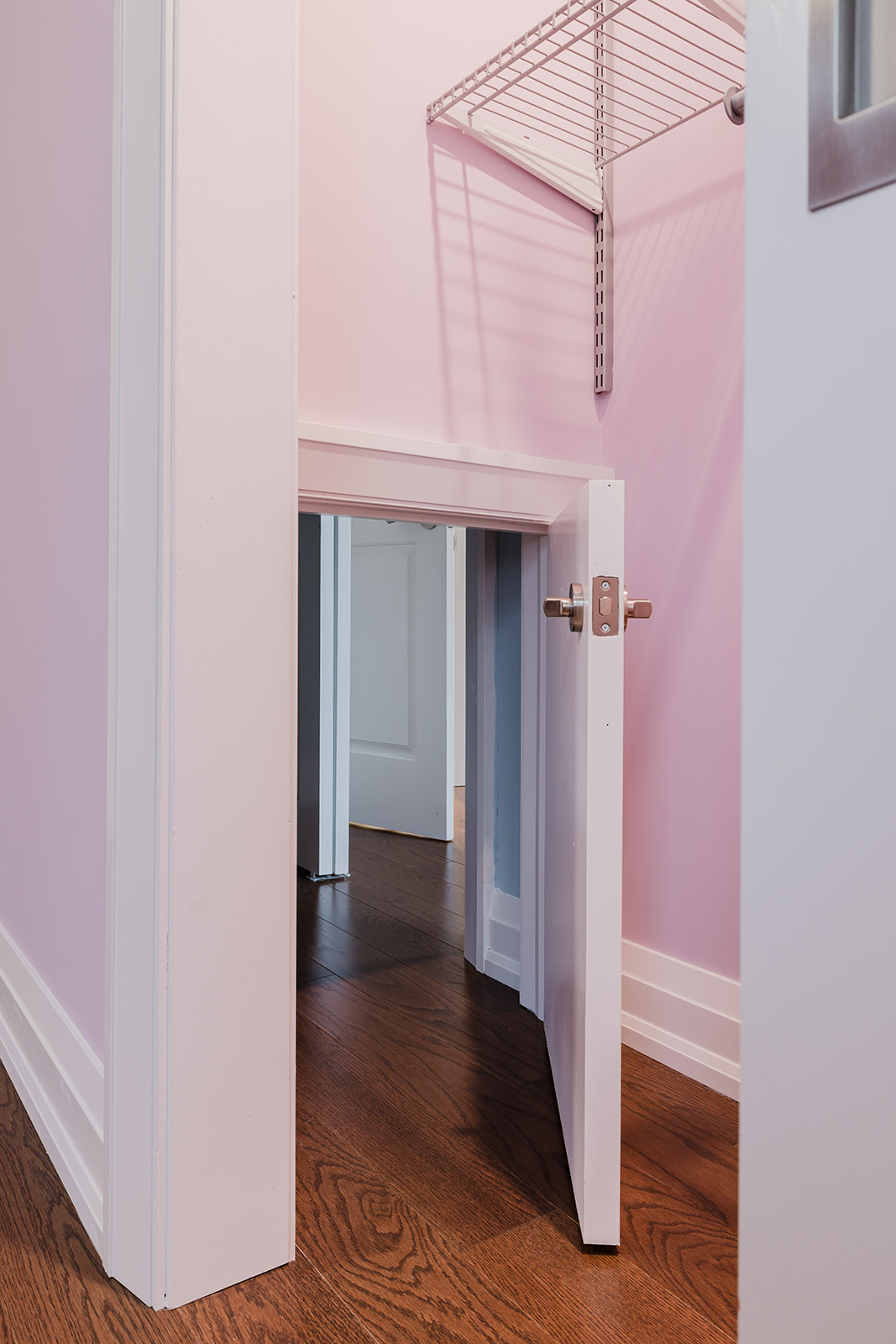
- A small connecting passage between the children’s closets, allowing their rooms to feel connected while maintaining separate spaces
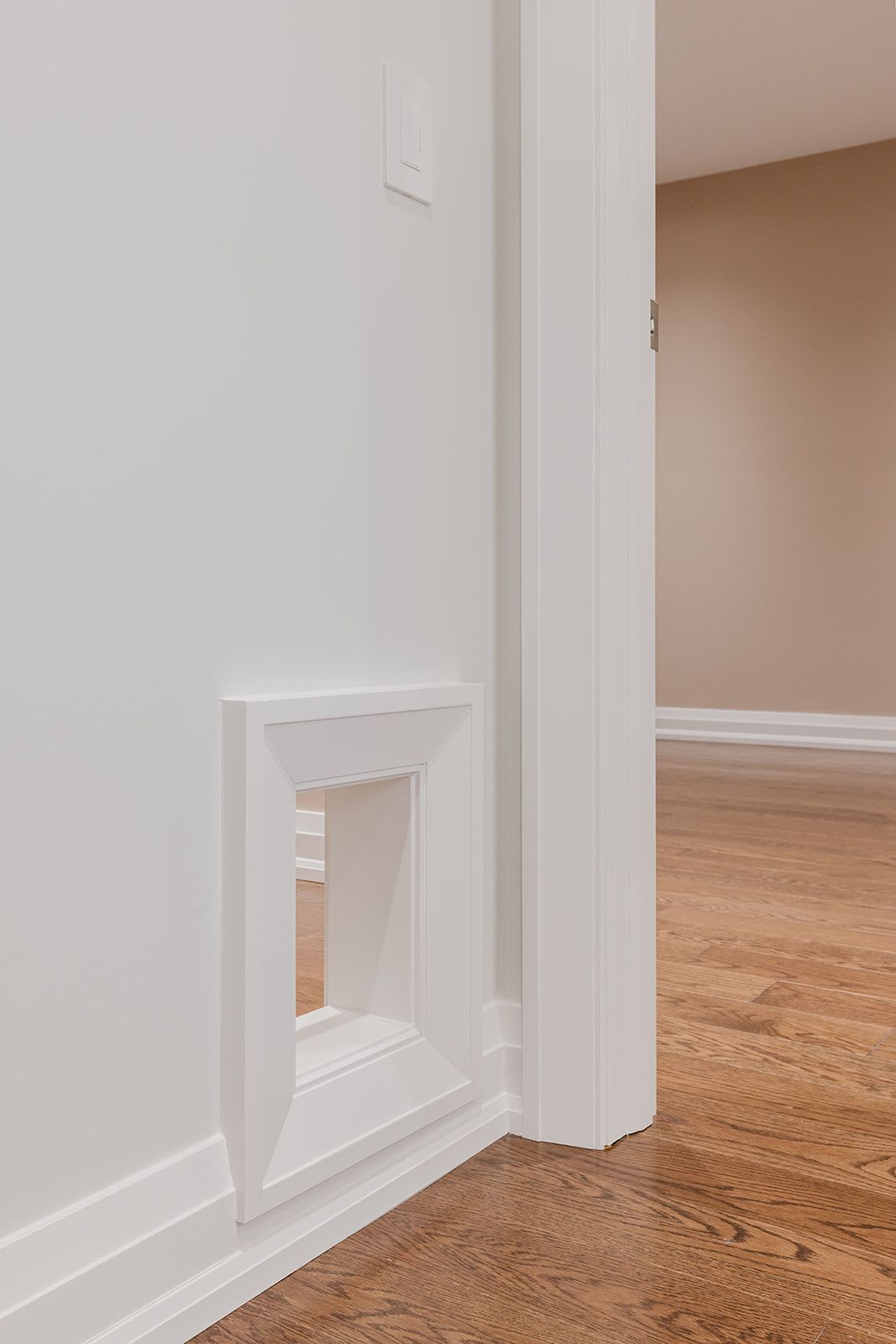
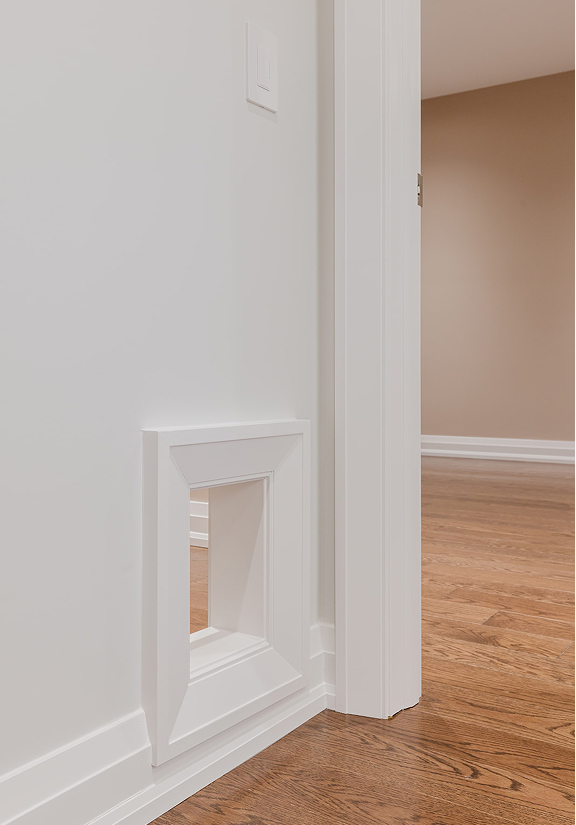
- A discreet cat door between the primary bedroom closet and hallway
- Upgraded HVAC and electrical systems
The Transformation
The house didn’t need more space. It needed to work better for the people living in it.
Today, the home feels more spacious, connected, and comfortable, with a layout that is easier to navigate and better suited to family life. The project was also recognized as an Ontario Home Builders’ Association Award of Distinction Finalist in 2026.